I once watched a wedding reception go from “dream celebration” to “total logistical meltdown” in exactly forty-five minutes, all because a high-end catering team arrived to find a kitchen the size of a broom cupboard. They had a menu designed for a five-star hotel, but they were trying to execute it in a space with a single lukewarm oven and one prep table that wouldn’t stop wobbling. This is the part the wedding blogs never mention: you can spend a fortune on the most exquisite seasonal menu, but if you don’t understand how kitchen facilities affect catering, you aren’t buying a meal—you’re buying a delayed disaster.
I’m not here to talk about floral arrangements or the perfect shade of linen; I’m here to talk about power loads, prep space, and hot water. Over nine hundred weddings, I’ve learned that the success of your event is decided in the back of the house long before the first guest picks up a fork. In this guide, I’m going to strip away the industry fluff and give you the unvarnished truth about what your caterers actually need to succeed, so you don’t end up paying for a masterpiece that never actually leaves the kitchen.
Table of Contents
Commercial Kitchen Workflow Efficiency vs the Reality of Chaos
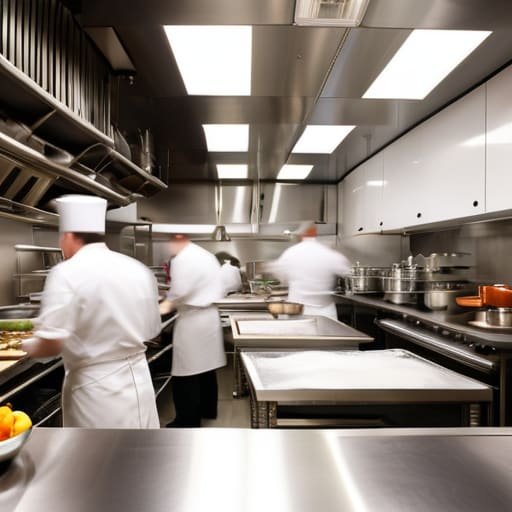
On paper, a floor plan looks like a dream. You see a beautiful, streamlined map of stations and prep zones, but paper doesn’t account for the heat, the noise, or the person tripping over a crate of sparkling water. In a perfect world, commercial kitchen workflow efficiency is a science of movement; in a real venue, it’s a contact sport. I’ve seen planners design a menu that requires six different finishing stations, only to realize the kitchen layout for large scale catering they’ve booked has the footprint of a garden shed. When you’re trying to plate three hundred covers, a three-second delay in moving from the stove to the pass doesn’t just feel slow—it cascades.
The real trouble starts when you hit the wall of catering equipment limitations. You might have a chef who can cook for a thousand, but if they are fighting for a single induction hob or a cramped prep area, the service rhythm breaks. Once that rhythm breaks, you aren’t just “behind schedule”—you are staring down the barrel of a hungry room and a licence end that is rapidly approaching.
How Food Preparation Space Constraints Kill the Evenings Momentum
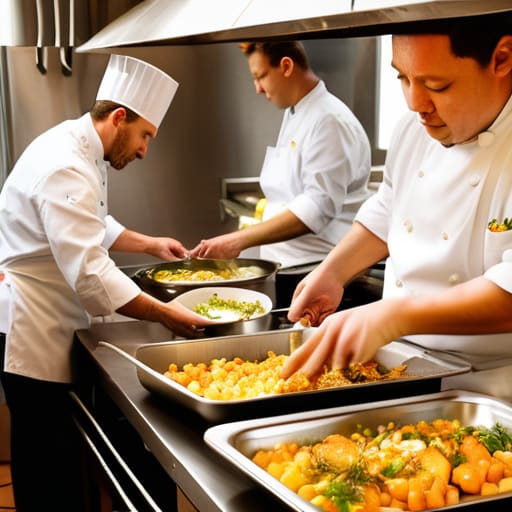
Here is where the “magic” of a wedding meets the cold, hard wall of reality. You’ve got a hundred hungry guests, a beautiful sunset, and a service staff that is currently playing a high-stakes game of Tetris in a room the size of a walk-in cupboard. When you deal with significant food preparation space constraints, the ripple effect is immediate. It’s not just about a messy counter; it’s about the fact that the person plating the mains can’t reach the oven without tripping over the person prepping the garnishes.
Once that bottleneck forms, the momentum of your entire evening dies. You see it every time: the speeches run long, the guests get a bit too much wine, and suddenly the kitchen is twenty minutes behind because they’re fighting over a single prep station. This isn’t a failure of the chef; it’s a failure of the catering operational capacity being strangled by the room itself. When the kitchen can’t breathe, the service can’t move, and you end up with a room full of people staring at their empty plates instead of dancing.
Five Ways Your Kitchen Layout Will Either Save the Night or Sink the Wedding
- Check the power load before you book the fancy equipment; if your caterer brings a high-spec induction range and your venue is running on a circuit designed for a toaster, you’re looking at a blown fuse and a very hungry room of two hundred people.
- Map out the “dirty” vs “clean” paths; if the staff has to carry used plates through the middle of the wedding breakfast service just to get to the dishwashing station, you’ve created a bottleneck that will delay every course by twenty minutes.
- Verify the water access and drainage, not just the taps; a caterer can work magic with a small prep area, but they can’t do much if they’re fighting a sink that drains at the speed of a glacier or if there isn’t enough hot water to sanitize a single tray.
- Budget for the “unseen” footprint; when you look at a kitchen plan, don’t just look at the counters—look at the floor space required for three people to pass each other with hot pans without causing a collision.
- Factor in the temperature-controlled storage reality; a beautiful menu means nothing if the kitchen lacks the refrigeration capacity to keep the proteins at a safe temperature while they’re waiting for the signal to plate up.
The Bottom Line on Back-of-House Reality
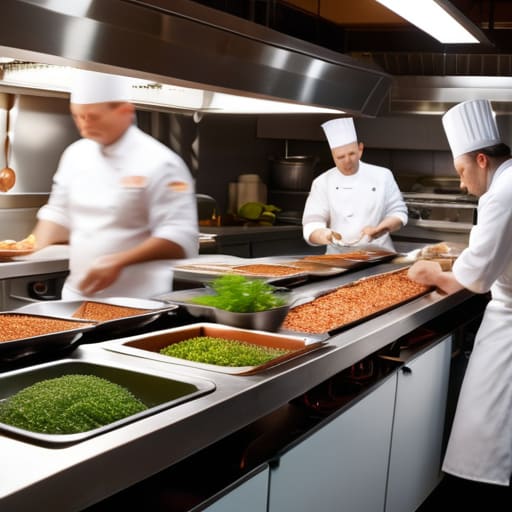
At the end of the day, you can spend your entire budget on hand-pressed linen napkins and centerpieces that look like they were plucked from a Tuscan garden, but none of that matters if the main course arrives cold because the kitchen layout is a bottleneck. We’ve talked about the workflow, the power requirements, and the physical space needed for a team to actually function without tripping over each other. If you ignore the logistics of the prep area, you aren’t just risking a late meal; you are systematically dismantling the momentum of the entire evening. A wedding isn’t just a series of pretty moments; it is a tightly wound clock that starts ticking the moment the first guest arrives, and a cramped, poorly equipped kitchen is the quickest way to jam the gears.
My advice? Stop looking at the catering menu as a list of ingredients and start looking at it as a series of movements. When you are scouting a venue, don’t just walk the ballroom; walk the service corridors and peek into the prep space. Ask the hard questions about access and wattage before you sign the contract. If you respect the logistics, the evening will feel seamless, effortless, and—most importantly—on time. Because when the kitchen is set up to win, the guests are the ones who get to enjoy the magic, rather than watching the staff scramble to fix a preventable disaster.
Frequently Asked Questions
How do I know if the venue's "kitchen" is actually a functional workspace or just a glorified pantry?
Don’t look at the shiny stainless steel; look at the floor plan and the sockets. If the “kitchen” is just a glorified pantry, you’ll see a lack of prep surfaces and—crucially—not enough power points for induction hobs or warming cabinets. Ask the venue: “Where does the heavy prep happen, and how many dedicated circuits do you have?” If they start stuttering about “flexible arrangements,” it means your caterer is going to be fighting for a single plug socket while your guests wait for appetizers.
If my caterer says they need more power, how do I figure out if the venue can actually handle it without tripping a breaker mid-service?
Don’t just take their word for it; ask for their equipment list. I need to see the wattage for every oven, hot plate, and coffee machine they’re lugging in. Once you have those numbers, don’t guess—get the venue’s electrical load schedule. If they can’t provide it, ask specifically which circuits power the kitchen and which are on the same line as the DJ. If they’re sharing a circuit, you’re one espresso machine away from a dark room.
What’s the realistic way to bridge the gap between a beautiful, remote ceremony site and a kitchen that's miles away?
You don’t bridge that gap with a prayer; you bridge it with a satellite kitchen or a dedicated staging area. If your ceremony is in a meadow and your kitchen is in a basement three buildings away, you’ve already lost the battle. You need a “hot drop” point—a mobile prep station with enough power and water to finish the plates. Otherwise, you aren’t serving a warm meal; you’re serving lukewarm disappointment.