I’ve sat through enough wedding breakfasts to know that when people search for a “complete guide to event bars,” they aren’t actually looking for a list of premium gin brands or a breakdown of artisanal ice shapes. They’re usually looking for a way to stop their guests from forming a stationary, disgruntled mob at the service point thirty minutes after the speeches end. I once saw a high-end corporate gala completely derail—not because the champagne was warm, but because the bar layout ignored the basic physics of human movement and left three hundred people fighting over a single narrow corridor.
Forget the glossy brochures and the fluff about “bespoke cocktail experiences” that cost a fortune and take ten minutes to pour. I’m going to give you the actual, unvarnished mechanics of what makes a bar work. We’re going to talk about power requirements that won’t trip your DJ mid-set, the precise ratio of bartenders to guests to prevent a bottleneck, and how to manage the inevitable chaos of the final hour before the licence ends. This isn’t about the garnish; it’s about the logistics of keeping the drinks flowing and the peace kept.
Table of Contents
The Math of Thirst Event Beverage Service Planning
Most people approach their guest list and think, “Great, fifty people.” I look at that same list and see fifty thirsty people arriving simultaneously at 7:00 PM, right when the sun goes down and the first round of drinks is needed. This is where most amateur planning fails: they focus on the brand of gin rather than the beverage service cost breakdown. You need to calculate your volume based on consumption rates, not just “vibes.” If you have a hundred guests and only one bartender, you aren’t running a party; you’re managing a queue that will eventually turn into a crowd of disgruntled people staring at their watches.
When you move into the actual event beverage service planning, you have to account for the “surge.” There is a predictable spike at the start of the reception and another right after the speeches. If you’re using mobile bar rental services, don’t just ask about the aesthetic of the wooden frontage; ask about their pour speed and how many ice bins they bring. If your math is off, the service slows, the tension rises, and suddenly you’re fighting a losing battle against the clock and a very impatient wedding party.
Mobile Bar Rental Services and the Illusion of Effortless Flow
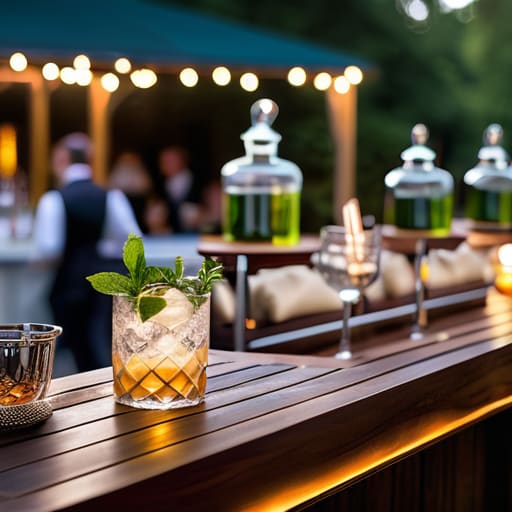
When you look at those Pinterest boards, a mobile bar looks like a charming wooden cart tucked under a willow tree. In reality, most mobile bar rental services are a logistical puzzle involving floor space, drainage, and the terrifying reality of power requirements. I’ve seen “aesthetic” setups that look stunning until the first guest asks for a gin and tonic, only for the bartender to realize they are working off a single, daisy-chained extension cord that’s about to trip the circuit for the entire DJ booth. If you aren’t checking the wattage of their refrigeration units against your venue’s capacity, you aren’t planning; you’re just hoping for the best.
Then there is the “effortless” flow that usually evaporates ten minutes after the speeches end. People hire a pretty bar, but they forget about the beverage service cost breakdown regarding actual staffing. You can have the most curated cocktail menu in the county, but if you only have one person behind that bar for a hundred guests, that menu is just a list of things people won’t actually get to drink. You need to map the physical footprint—the “back-of-house” area where the bottles live—to ensure the staff isn’t tripping over the bride’s train just to reach the ice.
The Logistics of the Pour: Five Ways to Prevent a Bar Bottleneck
- Map your power before you map your menu. If you’re hiring a mobile bar that brings high-output coffee machines or heavy-duty ice makers, you better check the circuit load. There is nothing quite like the silence of a dead venue mid-reception because someone plugged a keg cooler into the same circuit as the DJ.
- The ‘One Drink per Minute’ Rule. I don’t care how many fancy garnishes you have; a single bartender can only realistically serve about sixty people an hour if they are doing anything more complex than pouring a draught lager. If you have two hundred guests and only one person behind the wood, you aren’t hosting a party—you’re hosting a queue.
- Ice is not a garnish; it is a critical utility. Most planners treat ice like an afterthought, but if your delivery driver is running forty minutes late or you underestimated the volume for a summer wedding, your premium gin and tonic becomes a lukewarm tragedy. Budget for twenty percent more than you think you need.
- Respect the Licence End. I see it every time: the bar is slammed at 11:30 PM, the licence ends at midnight, and suddenly you have a frantic rush of people trying to order rounds. It’s a recipe for chaos. Start your ‘last orders’ call thirty minutes before the hard stop to smooth out the surge and avoid the inevitable argument with the local authorities.
- Space for the ‘Back of House’ dance. A bar isn’t just the counter where people stand; it’s the three metres behind it where the real work happens. If you haven’t accounted for the space needed for the staff to move, store empty crates, and access the glass wash, they will be tripping over each other, and your service speed will plummet.
The Bottom Line: Logistics Over Libations
At the end of the day, a successful bar service isn’t about having the most expensive gin or a bespoke cocktail menu that takes six minutes to stir. It’s about the invisible mechanics: having enough power so the ice machine doesn’t trip a breaker, enough staff to prevent a bottleneck at 8:00 PM, and a layout that respects the physical reality of human movement. If you’ve done the math on your guest count, vetted your mobile vendors for actual reliability, and accounted for the surge that happens the moment the speeches wrap, you’ve already won half the battle. Don’t let a beautiful aesthetic mask a logistical nightmare; once the licence end starts looming, the only thing your guests will remember is whether they were standing in a queue or actually enjoying the party.
I know it sounds unromantic. You want to talk about the crystal glassware and the garnish garnishes, but I’m here to tell you that the most memorable events are the ones where the service is so seamless it becomes entirely invisible. When the drinks flow without friction and the staff move like a well-oiled machine, you aren’t just managing a bar; you are protecting the atmosphere of the entire room. Plan for the chaos, respect the timings, and build your service around the reality of the crowd. Do that, and you won’t just host a party—you’ll host an event that actually works.
Frequently Asked Questions
How much power do I actually need to run a mobile bar without tripping a breaker mid-toast?
Listen, I’ve seen more weddings die in a puff of smoke from a blown fuse than from bad catering. You can’t just plug three coffee urns, a cocktail shaker, and a heavy-duty fridge into one daisy-chained extension lead and hope for the best. If you’re running a mobile bar, you need to map your peak load. Most venues provide standard 13-amp sockets, but if your caterer brings a high-wattage ice machine, you’re toast. Check the labels, calculate the total wattage, and spread the load across different circuits. Don’t wait until the speeches start to realize your bar is dead.
If I’m hiring a third-party caterer, who is responsible for the ice and the glassware—them or me?
If you’re assuming the caterer is bringing the ice and glassware just because they’re “handling the drinks,” you’re begging for a disaster. In my experience, if it isn’t explicitly written in the contract, it doesn’t exist. Most caterers quote for the liquid and the labor, not the heavy lifting of glass or the massive bags of ice required to keep things cold. Check your fine print now, or you’ll be the one hunting for ice at 9:00 PM.
What’s the realistic turnaround time for a bar setup if my ceremony runs twenty minutes late?
If your ceremony runs twenty minutes late, you aren’t just losing twenty minutes; you’re losing the buffer that keeps the whole afternoon from collapsing. Realistically? You’re looking at a thirty to forty-minute scramble. You have to account for the guests drifting late, the inevitable “just one more photo” delay, and the staff needing to reset glassware. If you haven’t built a thirty-minute cushion into your transition, you’ll be serving lukewarm prosecco to a crowd that’s already restless.