I once watched a promoter spend forty grand on a bespoke, floral-draped stage for a boutique festival, only to have the entire setup sink six inches into the mud because they forgot to check the ground load capacity. Everyone was looking at the sunset and the aesthetic, but I was looking at the crippling realization that the sound engineer had nowhere to plug in his gear without tripping over a decorative planter. If you’re searching for tips for hosting an outdoor summer concert that involve choosing the perfect shade of bunting or the most Instagrammable cocktail menu, you’re looking in the wrong place. Those things are lovely, but they won’t save you when your power grid fails halfway through the headliner’s set.
I’m not here to sell you on a dream; I’m here to help you manage the reality. I’m going to skip the fluff and give you the hard-won, logistics-first truth about what actually keeps a crowd happy and a site running. We are going to talk about drainage, cable management, toilet ratios, and the brutal mathematics of crowd flow. By the time we’re done, you won’t just have a pretty event—you’ll have a functioning machine that survives until the licence ends.
Outdoor Event Sound System Setup and Power Realities

Everyone focuses on the lineup, but nobody talks about the umbilical cord keeping the whole thing alive: the power. If you’re planning an outdoor event sound system setup, stop assuming you can just plug a massive PA rig into a standard garden socket. You can’t. I’ve seen more mid-set meltdowns caused by a tripped breaker than by a bad singer. You need to calculate your total draw, factor in the spike when the bass kicks in, and ideally, rent a silent generator that won’t drown out the acoustic set. If you’re running any summer concert venue lighting ideas alongside the audio, double your power calculations immediately.
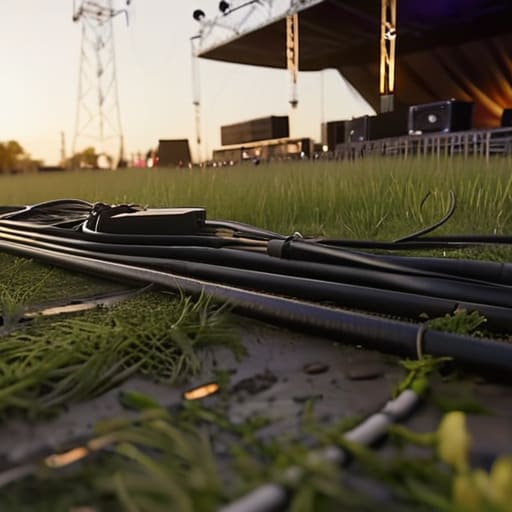
Then there is the physical reality of cables. An open field is a minefield of trip hazards waiting to happen. You need heavy-duty cable ramps, or you’ll spend your evening apologising to guests instead of enjoying the music. I always tell people to map out the “dead zones” where the sound won’t reach before they commit to the layout. It’s not about being loud; it’s about consistent coverage that doesn’t leave half your crowd standing in a silent vacuum.
Weather Contingency Plans for Events That Cannot Fail
Here is the reality of outdoor planning: Mother Nature doesn’t care about your ticket sales or your social media aesthetic. I’ve seen a perfectly choreographed afternoon turn into a mud bath in twenty minutes because someone thought a “slight chance of showers” meant they could skip the heavy-duty marquee. When you are building weather contingency plans for events, you aren’t just planning for rain; you are planning for the wind that snaps tent poles and the sudden heatwave that turns your shade structures into ovens. You need a “Plan B” that is as robust as your “Plan A,” or you’ll spend the whole evening playing damage control instead of managing the floor.
If the clouds roll in, your logistics change instantly. It’s not just about keeping people dry; it’s about how that moisture affects your outdoor concert food and beverage planning. You can’t have people queuing for lukewarm burgers in a downpour, and you certainly can’t have staff slipping on sodden grass while carrying trays. Have a designated indoor or covered area ready, and ensure your layout allows for a quick pivot. If you don’t have a way to move the crowd without causing a bottleneck, you aren’t prepared—you’re just lucky.
The Invisible Infrastructure: 5 Things That Actually Make or Break Your Crowd
- Mapping the “Drink-to-Human” Ratio. Everyone focuses on the stage, but nobody focuses on the queue. If you have five hundred people and only two bar points, you’ll have a disgruntled, thirsty crowd by the second set. You need to calculate how many people can actually get a drink in a twenty-minute window, or you’ll spend the whole night managing a slow-motion riot at the service counter.
- The Perimeter and the “Drift” Factor. A concert isn’t just the stage area; it’s the space people occupy when they’re standing around. If you don’t account for the “drift”—that awkward space where people congregate between the bar and the toilets—you’ll end up with blocked fire exits and a logistical nightmare that makes your security team’s life miserable.
- The Sanitation Math. It sounds unglamorous, and it is. But if you’ve budgeted for five portable toilets for a crowd of six hundred, you’ve failed. You need to calculate based on the duration of the event and the volume of liquid being consumed. A lack of facilities is the fastest way to turn a great concert into a venue people never want to visit again.
- Access, Access, and More Access. I’ve seen beautiful setups ruined because the caterer arrived with a van that couldn’t clear the narrow gate, or the load-in crew had to haul heavy gear through a crowd of ticket holders. You need a dedicated ingress and egress plan for staff and suppliers that doesn’t collide with your paying customers.
- The Hard Stop and the Exit Strategy. I count every minute backwards from the licence end. You need a plan for the “Great Migration”—the moment the music stops and five hundred people suddenly realize they all need to leave at once. If you haven’t planned the lighting and the signage for the exit, you aren’t running a concert; you’re running a bottleneck.
The Final Countdown to Load-In
At the end of the day, a successful outdoor concert isn’t won by the quality of the headliner’s rider, but by how well you managed the invisible stuff. You’ve checked the power draws, you’ve mapped out your wet-weather fallback, and you’ve hopefully accounted for the fact that a crowd of five hundred people will consume water and sanitation much faster than any spreadsheet suggests. If you have secured your cables, planned your perimeter, and respected your licence end time, you have already done more than half your competition. It is about building a logistical skeleton that is strong enough to support the spectacle, ensuring that when the music starts, the only thing people notice is the sound, not the chaos happening behind the stage.
People will tell you that outdoor events are about the magic of the moment, and they aren’t wrong—but that magic is a fragile thing that relies on a foundation of meticulous, unglamorous planning. When the sun is setting and the first chord hits, nobody is going to cheer for your cable management or your drainage strategy, and frankly, that is exactly how it should be. The goal is to work so hard on the mechanics that the logistics become invisible, leaving nothing behind but a seamless experience for the crowd. Do the hard graft now, so that when the lights go up, you can actually step back and watch the show instead of chasing a wayward generator.
Then there is the matter of the crowd itself—specifically, how you keep them from turning into a disorganized mob the moment the first set ends. You can have the best sound system in the county, but if your perimeter isn’t clearly defined and your staff doesn’t know exactly where the exit routes are, you’re asking for a headache. I always tell people to treat your site map like a battlefield; you need to know exactly where the bottlenecks will happen, especially near the bars and the toilets. If you find yourself staring at a blank spreadsheet wondering how to actually structure the flow of people, I’ve found that checking out some [hausfrauensex online](https://sexschweiz.ch/hausfrauensex) can offer a bit of a mental reset before you dive back into the nitty-gritty of crowd control and site logistics. Just make sure your access points are wide enough for a panicked crowd, or you’ll be the one dealing with the fallout when the music stops.