If you spend more than five minutes on Pinterest looking for a “complete guide to community events,” you’ll be buried under a mountain of pastel bunting, artisanal cupcake ideas, and enough floral arrangements to make your eyes bleed. It’s all lovely, provided you don’t actually have to run the thing. Most of these guides assume you have an unlimited budget and a team of assistants, but they never mention the reality: the sudden realization that your local hall only has three working power sockets, or the fact that your “casual gathering” is about to hit a hard wall because the council noise permit expires at 11:00 PM sharp.
I’m not here to talk about color palettes or how to make a centerpiece out of driftwood. I’m here to talk about the mechanics of making sure people actually get fed, the bar doesn’t turn into a bottleneck, and your volunteers don’t descend into chaos by mid-afternoon. This is a guide built on eighteen years of seeing exactly where the wheels fall off. We are going to focus on the logistical bones of your event—the timings, the access, and the invisible stuff that actually determines whether your community event is a triumph or a total breakdown in progress.
Table of Contents
Event Permit Requirements and the Paperwork That Kills Joy

Everyone loves the idea of a street fair or a neighborhood block party until they realize they’re staring down a mountain of bureaucracy. You think you’re organizing a bit of fun, but the council sees a liability nightmare. The reality is that event permit requirements are the silent killers of momentum. I’ve seen brilliant community leaders lose steam because they spent three months chasing a noise variance or a temporary structure permit instead of actually planning the day. If you aren’t looking at your paperwork as a hard deadline, you aren’t planning; you’re just wishing.
Don’t let the red tape catch you off guard. When you’re building your event planning checklist, the “legal and permits” section shouldn’t be a footnote at the bottom—it should be the foundation. I always tell people to work backward from the date you actually want the gates to open. If the council takes six weeks to process a street closure, and you’re only applying six weeks before the event, you’ve already lost. Get the permits sorted early, or you’ll find yourself with a perfectly organized crowd and absolutely nowhere for them to legally stand.
An Event Planning Checklist for the Unseen Realities
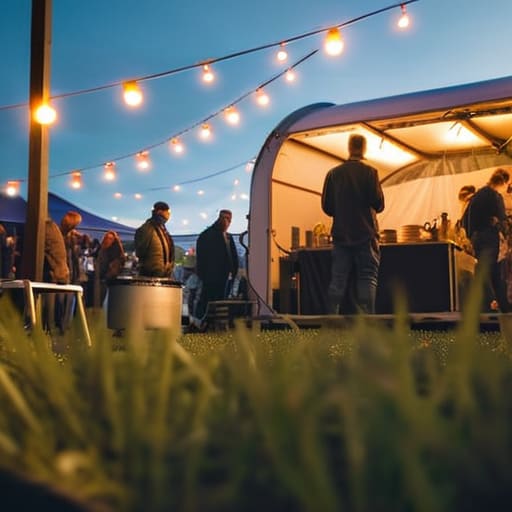
Most people approach an event planning checklist by listing the fun stuff: the bouncy castle, the local band, or the theme. I don’t care about the theme. I care about the power draw. If you’ve booked a DJ and a coffee van but haven’t checked if your circuit can handle both without tripping the main breaker, you aren’t planning an event; you’re planning a blackout. Your checklist needs to include the “boring” physical realities: where the rubbish goes, how many toilets are actually required for a crowd of two hundred, and exactly how much space the catering tent needs to unload without blocking the fire exit.
Then there is the human element, which is the most unpredictable variable in the room. I’ve seen perfectly timed schedules fall apart because of poor volunteer management tips—specifically, the assumption that people will show up exactly when you ask them to. You need a “Plan B” for when your key person is stuck in traffic or your local sponsor pulls their marquee at the eleventh hour. If your logistics don’t account for the friction of human error, you’re just hoping for the best, and hope is not a management strategy.
The Five Horsemen of the Community Event Apocalypse
- Stop obsessing over the theme and start mapping the power. If you’ve got a DJ, a coffee van, and a catering tent all trying to plug into the same single outdoor socket, you aren’t running an event; you’re running a fire hazard. Check your voltage, check your cables, and for the love of God, make sure they aren’t running across a main walkway where someone is bound to trip.
- The “Twenty-Minute Bar Bottleneck.” I don’t care how many volunteers you have; if you have two hundred people arriving at once and only one person pouring drinks, your event has effectively died in the queue. You need to stagger arrivals or double your service points. A hungry, thirsty crowd is a restless, complaining crowd.
- Respect the Licence End like it’s a hard deadline from the tax man. If your permit says the noise has to stop at 11:00 PM, do not—under any circumstances—plan a “big finale” for 10:45. You’ll be halfway through the last song when the police show up, and once you’ve lost the trust of the local council, you aren’t getting it back for the next one.
- Plan for the “Three-Metre Gap.” Most people plan for the people, but they forget the stuff. Your caterer needs space to move, your waste management needs a clear path to the bins, and your elderly guests need a way to get to the toilets without navigating a maze of folding chairs. If you haven’t left room for the movement of things, the whole thing will grind to a halt.
- The “Unscheduled Speech” Contingency. In every community event, there is one person who thinks they are the keynote speaker but was actually just invited for the free sausage roll. Build “buffer time” into your schedule—fifteen-minute chunks where nothing is supposed to happen. If the schedule runs over, you use the buffer. If it doesn’t, you get a coffee.
The Final Countdown
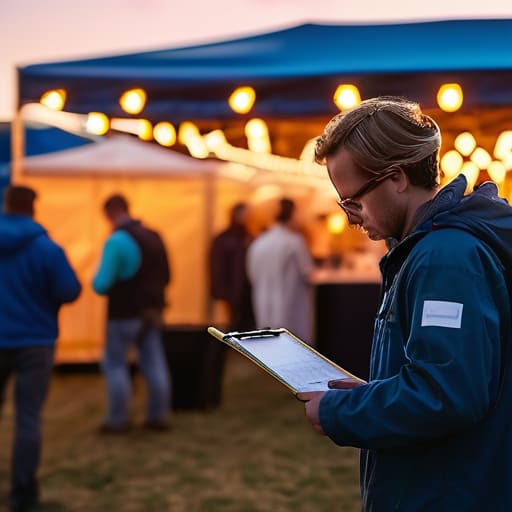
At the end of the day, a successful community event isn’t measured by how many people liked the Instagram photos of the decorations; it’s measured by the fact that the power didn’t trip during the speeches and the local police didn’t knock on the door ten minutes before the licence end. You’ve looked at the permits, you’ve mapped out the access routes, and you’ve hopefully accounted for the fact that a hundred hungry people cannot be served by one single buffet line in twenty minutes. If you have managed the unseen logistics—the waste management, the load-in schedules, and the inevitable paperwork hurdles—then you have already done the heavy lifting. You aren’t just throwing a party; you are managing a complex moving machine that requires precision to keep from grinding to a halt.
Look, I know it sounds clinical. I know it’s not as romantic as the “vision boards” people talk about. But there is a profound, quiet beauty in an event that flows without a hitch. When the timings are tight, the access is clear, and the chaos is kept behind the scenes, people are actually free to enjoy themselves. They don’t notice the caterer’s footprint or the way you navigated the council’s red tape; they only notice how much fun they are having. Do the hard work on the logistical bones of the event, and I promise you, the soul of the community will find its way there. Now, check your watch—you’ve got a licence to respect.
Frequently Asked Questions
How do I figure out if my venue actually has enough power for the caterer and the band without blowing a fuse halfway through the speeches?
Stop guessing and start counting. Ask your caterer for their total wattage and your band for their lighting and sound requirements. Then, look at your venue’s breaker box. You aren’t just looking for “enough” power; you’re looking for dedicated circuits. If the band is plugged into the same circuit as the coffee urns, you’re one toast away from a dark room and a very awkward silence. Map it out before the first plug goes in.
What’s the realistic way to handle a crowd that hits the bar all at once when I only have two staff members working?
You don’t “handle” it; you mitigate the disaster. First, stop selling complex cocktails. If you have two staff and a crowd, your menu is beer, wine, and one signature spirit. That’s it. Second, prep your glassware and ice before the rush hits. If you’re still hunting for clean tumblers when the line hits the door, you’ve already lost. Aim for speed over sophistication, or prepare to watch your event stall at the bar.
How much "buffer time" should I actually build into the schedule to account for the inevitable delays with guest arrivals or speeches running over?
If you’re planning for zero margin, you’re planning for failure. I always build a 15% buffer into every major transition. If a speech is scheduled for ten minutes, budget fifteen. If you’re moving 100 people from a ceremony to a marquee, add twenty minutes for the inevitable “lingering guest” factor. You don’t want to be staring at the clock, counting backwards from the licence end, while a rogue uncle is still mid-anecdote.