
I remember standing in a darkened ballroom three years ago, listening to the rhythmic, hollow sound of rain lashing against the skylights while a bride sobbed into a linen napkin. The caterer was stuck on a flooded motorway, the band’s van had blown a tire, and the entire evening was dissolving into a logistical nightmare. In that moment, nobody was thinking about the aesthetic of the centerpieces; they were all staring at their contracts, trying to figure out how force majeure clauses operate before the bank accounts started bleeding dry. Most people think these clauses are just fancy legal padding meant to protect the venue, but in the trenches, they are the only thing standing between a manageable delay and a total financial collapse.
I’m not here to give you a lecture on legalese or sell you on a “stress-free” fantasy that doesn’t exist. I’ve seen enough disasters to know that the paperwork is what keeps the lights on when the unexpected hits the floor. I’m going to strip away the jargon and show you exactly how these clauses work in the real world—the parts the lawyers don’t mention and the wedding planners conveniently ignore. We’re going to talk about actual accountability, from sudden venue closures to the “acts of God” that actually matter to your bottom line.
Table of Contents
The Act of God Legal Definition vs Reality

If you Google the act of God legal definition, you’ll get a dry lecture about lightning strikes, earthquakes, and celestial events that no human can influence. In a courtroom, that’s fine. In my venue, when the ceiling starts leaking or the main road is washed out by a flash flood, the legal textbook feels a bit thin. The reality is that most clients think “force majeure” is a magic wand that cancels everything just because things got difficult or expensive. It isn’t.
There is a massive gap between a storm that makes a wedding “inconvenient” and the actual contractual impossibility of performance. If a heavy rain means your guests have to walk through some mud to get to the marquee, that’s a nuisance, not a legal exit. To trigger these clauses, the event shouldn’t just be a headache; it has to be fundamentally impossible to execute. I’ve seen plenty of people try to use a bit of wind as an excuse to walk away from a contract, but unless that wind is literally tearing the roof off my building, we are still working within the bounds of what was agreed.
Unforeseeable Circumstances in Legal Contracts
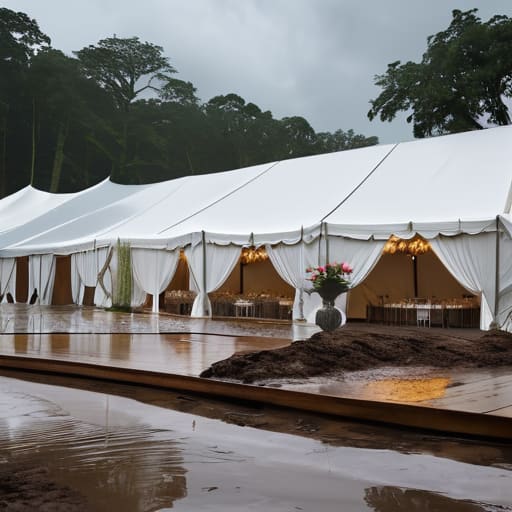
Here is the reality: lawyers love to talk about “unforeseeable circumstances in legal contracts” as if they are abstract concepts found in a dusty textbook. In my world, they are much more visceral. It is the sudden, violent storm that turns a marquee into a swimming pool, or the regional power outage that leaves a wedding breakfast in total darkness. We aren’t just talking about bad luck; we are talking about contractual impossibility of performance. If the road to the venue is washed away by a landslide, I can’t magically teleport three hundred guests and a five-tier cake into the ballroom. The contract has to account for the fact that sometimes, physically, the job simply cannot be done.
However, don’t mistake a “difficult” situation for a legal one. A caterer running two hours late because of traffic isn’t a force majeure event; it’s just bad planning. To trigger these clauses, you usually have to prove that the event was genuinely beyond anyone’s control. It is about the line between a logistical headache and a total breakdown of the agreement. If you try to use a clause to get out of a contract just because the weather is a bit grey, you’re going to find yourself in a very expensive legal argument.
Five Ways to Stop a Clause from Becoming a Paperweight
- Stop treating “Force Majeure” like a magic wand. You can’t just point at a rainy forecast and expect a refund; the clause is designed for the stuff that actually breaks the world, not just the stuff that ruins your outdoor cocktail hour. If the weather is predictable for your season, it isn’t “unforeseeable,” and it won’t save your deposit.
- Read the fine print on the “Notice Period.” I’ve seen more disasters caused by silence than by the actual event. If a storm is brewing or a supplier goes bust, you usually have a ticking clock to officially trigger the clause. If you wait until three hours before the ceremony to call it, you’ve already lost the battle.
- Check for the “Mitigation Clause” trap. Most contracts don’t just let you walk away because things got difficult; they require you to prove you tried everything else first. If you can move the wedding from the lawn to the ballroom, the law (and your venue) will expect you to do it rather than just cancelling the whole thing.
- Look for specific exclusions. A lot of people think a global pandemic or a sudden strike is an automatic “get out of jail free” card. It isn’t. You need to check if your specific contract explicitly includes or excludes things like “epidemics,” “labor disputes,” or “government actions.” If it isn’t written down, it doesn’t exist.
- Understand the difference between “Impossibility” and “Impracticability.” This is where the real fights happen. There is a massive legal canyon between “I physically cannot get the cake to the venue because the bridge is down” and “the cake is now twice as expensive because of inflation.” One is a force majeure; the other is just a bad Tuesday.
The Bottom Line When the Lights Go Out

At the end of the day, a force majeure clause isn’t some abstract legal theory you can ignore until it matters; it is the difference between a manageable setback and a total financial meltdown. We’ve covered how these clauses distinguish between a simple inconvenience—like a caterer running twenty minutes late—and the genuine, uncontrollable chaos that makes an event impossible to host. You need to know exactly what qualifies as an “Act of God” in your specific contract and, more importantly, what happens to your deposit when the world decides to stop turning. Don’t leave it to chance or a vague handshake; make sure your logistical safety net is as sturdy as the floorboards in my venue.
Planning an event is essentially an exercise in controlled optimism. You spend months obsessing over the seating charts, the lighting cues, and the exact moment the champagne needs to be poured, all while knowing that nature or politics could step in at any second. But here is the truth: you cannot plan for everything, but you can plan for the fallout. When you build your contracts with a clear understanding of these clauses, you aren’t being cynical; you are being professional. A well-planned event is a masterpiece of logistics, but a well-planned contingency is what allows you to sleep at night when the unexpected finally hits the floor.
Frequently Asked Questions
If the weather turns sideways but doesn't actually stop the event, does that count as force majeure or am I just out of luck?
Here is the hard truth: if the rain is just making your guests look a bit damp but they can still reach the bar, you’re likely out of luck. Force majeure is for when the event becomes impossible, not just inconvenient. A drizzle isn’t a catastrophe; it’s a logistical pivot. Unless the storm literally rips the roof off or washes away the access road, you’re expected to push through. Plan for the rain, or pay for it.
Does the clause cover me if my caterer pulls out at the eleventh hour, or is that just a broken contract rather than an "act of God"?
Let’s get one thing straight: a caterer vanishing an hour before service isn’t an “Act of God”—it’s a breach of contract. If your chef decides to skip town, that’s a human failure, not a lightning strike. Force majeure is for when the world breaks; a no-show is just someone being unreliable. You don’t look to the “unforeseeable” clause for that; you look to your indemnity and performance clauses to claw back your money.
If we have to cancel due to something massive like a pandemic, do I get my deposit back or am I just stuck paying for the venue's lost date?
Look, I’ll give it to you straight: it depends entirely on what you signed. If your contract says “non-refundable” and doesn’t specifically mention pandemics or government shutdowns, you’re fighting an uphill battle to get that deposit back. Most venues aren’t charities; we’ve got staff to pay and overheads to cover. If the date is gone, we’ve lost the chance to rebook it. Read the fine print now, or you’ll be reading it while crying later.