I once watched a wedding dissolve into a slow-motion train wreck because the couple spent forty minutes trying to choreograph a Broadway-style routine while their guests sat in a silent room with empty glasses and dying conversation. Everyone tells you that the first dance is about the romance, but after nine hundred weddings, I can tell you that’s a lie. The truth is that how first dances and transitions work is actually a high-stakes game of crowd control and momentum. If you don’t understand the mechanics of moving a hundred hungry people from a cocktail area to a seated dinner, or from a formal dance into a party atmosphere, you aren’t planning a celebration—you’re managing a bottleneck.
I’m not here to talk to you about choosing the perfect song or whether your lighting should be warm or cool. I’m here to talk about the logistics that the wedding blogs ignore. I’m going to show you how to master the tactical pivots that keep your timeline from collapsing and ensure your guests actually enjoy themselves instead of checking their watches. We are going to look at the real-world math of floor space, timing, and energy, so you can stop worrying about the “aesthetic” and start focusing on the flow of the room.
Table of Contents
The Physics of First Dance Song Length
Everyone wants the cinematic moment—the slow, sweeping gaze, the gentle sway, the feeling of being the only two people in the room. But here is the reality from behind the soundboard: if your chosen track clocks in at five minutes, you aren’t creating a romantic atmosphere; you are creating a logistical bottleneck. By the three-minute mark, the guests aren’t watching with rapt attention anymore; they are shifting their weight, checking their phones, or wondering if the bar is still open.
When I’m looking at a floor plan, I’m calculating the energy levels of the room. A song that is too long kills the momentum required for seamless dance floor transitions. You want to move from that intimate moment straight into the high-energy set, but you can’t do that if the crowd has mentally checked out because the song went on for an eternity. If you aren’t planning on choreographing song transitions to bridge the gap, keep your first dance song length to something between two and three minutes. It’s better to cut a track early and leave them wanting more than to let the energy bleed out of the room before the party has even started.
Choreographing Song Transitions for Maximum Impact
Here is the reality of the transition: you aren’t just moving from a slow sway to a party; you are managing a massive shift in room energy. If you spend four minutes doing a sentimental ballad and then expect the room to explode into a high-tempo disco track without a buffer, you’re going to face a literal momentum vacuum. I’ve seen it happen a hundred times. The couple finishes, the guests clap politely, and then there’s that agonizing ten seconds of silence where everyone looks at their shoes because nobody knows if they’re allowed to move yet.
To avoid that awkward lull, you need to treat choreographing song transitions like a tactical handoff. Instead of a hard stop, work with your DJ to bridge the gap. This might mean a gradual increase in BPM or a well-timed bridal party dance entrance that pulls the energy from the floor up to the dance area. You want to guide the crowd, not force them. If you don’t engineer that flow, you aren’t just losing the vibe—you’re losing the window of time before the older guests decide the bar is more interesting than the dance floor.
The Logistics of the Transition: Five Ways to Stop Your Timeline from Collapsing
- Respect the “Dead Air” Gap. The biggest mistake I see is planning for the dance but forgetting the walk. If you’re moving from a ceremony space to a ballroom, you haven’t just lost the time it takes to dance; you’ve lost the fifteen minutes of shuffling, coat-grabbing, and “where did the bride go?” confusion. Build a buffer into your schedule, or you’ll be chasing your timeline like a man trying to catch a runaway tray of champagne.
- The Buffet Bottleneck. If you’re following a first dance immediately with a meal service, you’re playing with fire. A high-energy dance followed by a sudden, silent transition to a seated dinner creates a massive momentum drop. If you’re doing a buffet, ensure your catering team is staged and ready to move the second the music stops, otherwise, your guests will be staring at an empty dance floor and a half-empty bar for twenty minutes.
- Lighting is a Functional Tool, Not Just an Aesthetic. Don’t just rely on the DJ to “fade the lights.” You need a clear visual cue that the transition has happened. If the lights stay dim while people are trying to find their seats, you’ll have a room full of confused, stumbling guests. Use a lighting change to signal to the brain: “The performance is over; the eating/socialising phase has begun.”
- The “One-Relative” Speech Trap. Never, under any circumstances, schedule a transition that relies on a single person being in a specific spot at a specific time to “kick things off.” I’ve seen weddings grind to a halt because Uncle Arthur couldn’t find his glasses or decided he needed a gin before he’d stand up. Build your transitions around the crowd and the catering, not the whims of a single guest.
- The Hard Stop Countdown. Everything in your transition should be measured against the licence end. If your first dance is at 9:00 PM and you have a heavy transition into a late-night snack or a secondary party phase, you are eating into your most valuable minutes. I always tell couples: every minute you spend adjusting the floor layout or moving furniture during a transition is a minute you aren’t making money or making memories. Plan the movement early, or pay for it in lost time.
The Final Countdown
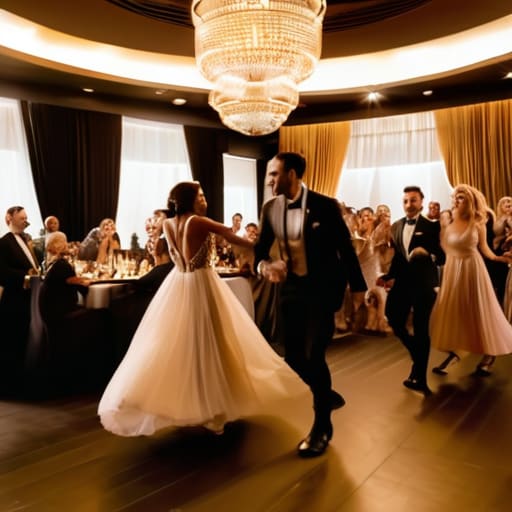
At the end of the day, a successful first dance isn’t about whether you nailed the footwork or if the lighting was cinematic; it’s about the mechanical flow of the room. If you’ve managed the song length to avoid that awkward five-minute lull and you’ve mapped out the transition so the guests aren’t stumbling over chairs to get to the dance floor, you’ve already won half the battle. You have to remember that every minute spent in transition is a minute closer to the licence end, and my job is to make sure you aren’t trying to squeeze a high-energy party into the final twenty minutes of a night that should have peaked an hour earlier. Control the timing, manage the crowd, and the rest will follow.
Look, I know the wedding blogs tell you to focus on the aesthetic, but I’m telling you to focus on the momentum. When you get the logistics right, the “magic” happens almost by accident because nobody is standing around wondering what they should be doing next. A well-timed transition allows your guests to stop being spectators and start being participants. If you plan the unseen architecture of these moments with enough precision, you won’t just have a beautiful wedding—you’ll have an event that feels effortless, even though we both know it was planned to the second.
Frequently Asked Questions
If we decide to go for a "surprise" dance that transitions into a group number, how much extra time do I need to build into the schedule for the guests to actually get on the floor?
You need to build in fifteen minutes of “buffer chaos.” A surprise dance is a high-stakes pivot; you aren’t just changing songs, you’re changing the room’s entire energy. Between the couple finishing their routine, the DJ cueing the group track, and the inevitable ten minutes where guests spend more time debating whether to join in than actually dancing, you’ll lose momentum if you don’t account for it. Plan for the transition, not just the dance.
How much space do we actually need for the dance itself—I've seen couples try to do a choreographed routine in a space that barely fits the tables, and it's a disaster.
Look, I’ve seen it happen: a couple tries to perform a Broadway-level routine in a gap between the linen-clad tables that’s barely wide enough for a waiter with a tray. It’s a recipe for a broken heel or a spilled glass of Cabernet. You need a dedicated “action zone.” For a standard dance, don’t just think about the two of you; think about the radius of your widest step and the buffer needed so you aren’t clipping chairs. If you’re doing choreography, you need a minimum of 4m x 4m of clear floor space. Anything less and you aren’t dancing; you’re just navigating an obstacle course.
What happens to the momentum if the caterers need to clear the plates immediately after the first dance? Can we actually eat while the party is starting, or does the timeline force a dead gap?
If the caterers start clearing plates the second you finish that final spin, you haven’t lost momentum—you’ve killed it. That’s the “dead gap” no one warns you about. You can’t dance on a floor that’s being mopped, and guests won’t party if they’re staring at half-eaten risotto. You need a buffer. Aim for a fifteen-minute reset where the floor is cleared and the lighting shifts. If you try to eat and party simultaneously, you just end up with crumbs in the disco.