I’ve spent eighteen years watching wedding planners present beautiful, colour-coded spreadsheets that look more like art projects than actual plans. They’ll show you a timeline where the bride arrives at 12:00 and the cake is cut at 14:00, but they never mention the thirty-minute bottleneck at the bar or the fact that the florist has blocked the service entrance with a van. If you’re looking for a Pinterest-ready template, you’ve come to the wrong place; learning how to build a production schedule isn’t about picking pretty fonts, it’s about accounting for the unseen friction that actually runs an event.
I’m not here to sell you on a dream or a lifestyle; I’m here to give you the gritty, logistical blueprint that keeps the doors open and the guests happy. We are going to strip away the fluff and focus on the hard math of movement, power requirements, and the critical gaps between transitions. By the time we’re done, you’ll understand how to build a production schedule that doesn’t just look good on paper, but actually survives the reality of a license end and a hungry crowd.
Table of Contents
Mastering Milestone Tracking Before the First Guest Arrives

Most people think milestone tracking is just ticking boxes on a checklist to feel productive. It isn’t. In my experience, it’s about identifying the “point of no return” for every moving part. If your florist hasn’t confirmed their delivery window forty-eight hours out, you don’t have a decoration problem; you have a logistical bottleneck that will bleed into your setup time. You need to treat your project management timelines as a series of dominoes. If the AV team doesn’t finish their soundcheck by 2:00 PM, the rehearsal is delayed, the catering prep shifts, and suddenly you’re trying to serve a three-course meal to a room that still smells like soldering iron.
Effective milestone tracking is actually a form of resource allocation planning. I don’t care if the linens are silk or polyester; I care if the delivery truck is scheduled to arrive at the exact same moment the heavy kitchen equipment is being unloaded through the same narrow service door. You have to map out these collisions before they happen. If you aren’t auditing your operational efficiency weeks in advance, you aren’t planning an event—you’re just hoping for the best. And hope is not a strategy I’ve ever found useful when the licence ends at midnight.
Resource Allocation Planning for the Unseen Chaos
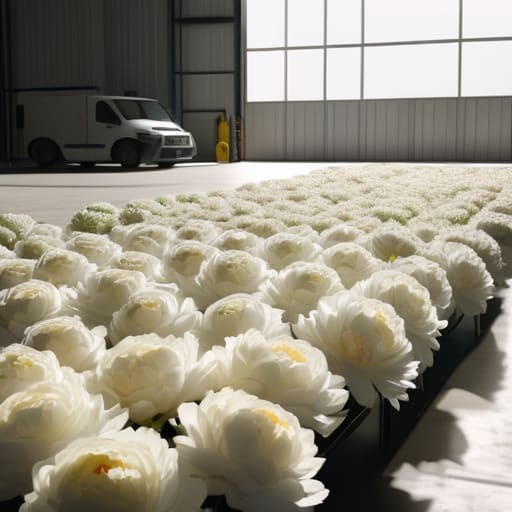
Most people think resource allocation planning is about making sure you have enough champagne and enough chairs. It isn’t. It’s about realizing that your florist, your AV tech, and your catering lead all need to use the service lift at the exact same time, and only one of them can win that battle. If your schedule doesn’t account for the physical footprint of your vendors, you aren’t planning an event; you’re just hoping for the best. I’ve seen a beautiful wedding turn into a frantic obstacle course because the decorator didn’t realize the kitchen staff needed a clear path to the loading bay at 4:00 PM.
To maintain actual operational efficiency, you have to look at your venue as a finite ecosystem of space and power. You need to map out the “invisible” resources: the number of available electrical circuits for the band, the square footage required for the buffet setup, and the specific window when the cleaning crew can vanish without being seen. True production capacity planning means knowing exactly how much “stuff” can be in a room before it stops being a party and starts being a warehouse. If you don’t budget for the physical reality of your vendors, the logistics will bite you.
The Logistics of the 'In-Between': Five Rules for a Schedule That Doesn't Break
- Build for the ‘Dead Time’ gaps. Most people schedule the ceremony for 2:00 PM and the dinner for 6:00 PM, leaving a four-hour void that looks easy on paper but is a nightmare in reality. You need to account for the “dead time”—the movement of three hundred people from a seated ceremony to a cocktail area, the time it takes for a bride to actually find her shoes, and the inevitable bottleneck at the bar. If you don’t schedule the transition, you aren’t planning an event; you’re just hoping for the best.
- Work backwards from the licence end. I don’t care how much the band wants an encore; if the licence ends at midnight, the music stops at midnight. Every single milestone in your production schedule should be anchored to that hard stop. If your cleanup and load-out aren’t built into the final hour, you’ll be paying staff overtime to sweep floors while the guests are still staring at you.
- Factor in the ‘Caterer’s Radius’. A common mistake is scheduling a meal for 7:00 PM without checking if the kitchen actually has the physical space to plate for two hundred people at once. Your schedule needs to include ‘plating windows’ and ‘service buffers.’ If the kitchen needs twenty minutes to get the heat right, that’s twenty minutes that must be blocked out in your timeline before a single plate hits a table.
- The ‘Single-Thread’ Rule. Never schedule two high-intensity, high-dependency tasks at the exact same time if they rely on the same pool of people. You cannot have your floor staff setting up the buffet while simultaneously running drinks for the cocktail hour. If your schedule has two major “movements” happening simultaneously, you’ve just doubled your chance of a total operational collapse.
- Build in a ‘Chaos Buffer’ for every major transition. In my experience, something always takes fifteen minutes longer than it should—a florist arrives late, a guest gets lost, or a microphone fails. If your schedule is a tight, interlocking sequence of events with zero breathing room, one small hiccup will cascade through the entire night like a row of falling dominoes. Give yourself a fifteen-minute “buffer” after every major milestone to absorb the inevitable.
The Blueprint Behind the Magic

At the end of the day, a production schedule isn’t some decorative document you print out to look professional; it is your primary line of defence against the inevitable entropy of a live event. We have covered the necessity of tracking milestones before the doors even swing open and the brutal reality of resource allocation—ensuring that when the caterer shows up demanding space, you actually have it. If you haven’t accounted for the transition times, the power requirements, or the sheer physical movement of people from point A to point B, you aren’t planning an event; you are merely hoping for the best. And in my experience, hope is a terrible substitute for a well-timed logistics map.
When the lights go up and the music starts, nobody will see the frantic coordination or the invisible scaffolding that holds the evening together. They will see the flowers, the laughter, and the seamless flow of a perfect evening. But you will know the truth: that “effortless” feeling was actually engineered through precision. A solid schedule doesn’t stifle the soul of a wedding or a conference; it creates the safety net that allows the magic to happen without the machinery grinding to a halt. Build your timeline with grit, plan for the gaps, and remember that the best events are won in the margins.
Frequently Asked Questions
How do I build in enough "buffer time" for the inevitable delays without making the whole day feel like it's dragging?
You don’t build buffer time by adding empty gaps; you build it by padding the transitions. If the speeches are scheduled for 8:00 PM, you tell the client they start at 7:45 PM. That fifteen-minute “ghost window” absorbs the late caterer or the uncle who won’t stop talking. You want the momentum to feel tight, so you hide the slack in the moments where people are already moving or drinking.
When the caterer and the florist both demand the same access point at the same time, how do I decide whose schedule takes priority?
You don’t decide based on who has the prettier setup; you decide based on the clock. The florist is working with perishable life; the caterer is working with temperature-sensitive food. If the florist is blocking the loading bay while the chef is trying to get hot plates to the pass, the chef wins every single time. Food goes cold, and a cold meal is a dead event. Plan the access windows so they never even meet.
At what point does a production schedule become too rigid to handle the actual, unpredictable human element of a wedding?
The moment you stop treating your schedule as a living document and start treating it like a religious text is when you’re in trouble. If your plan doesn’t have “buffer zones”—basically polite ways of saying ‘the inevitable chaos’—it’s too rigid. I don’t plan for things to go right; I plan for the bridesmaid to lose her shoes or the DJ’s laptop to die. A good schedule manages the logistics; a bad one tries to micromanage human nature.