I once watched a wedding photographer spend forty minutes discussing the “mood” of the candlelit tablescape while the catering team was practically tripping over each other in the service corridor because no one had accounted for the three-metre gap needed for the trolley turnaround. Most blogs will give you a “complete guide to production schedules” that looks like a work of art—pretty colors, aesthetic fonts, and vague suggestions to “allow time for transitions.” They treat a schedule like a suggestion, but in my experience, a schedule is a survival manual. If you aren’t planning for the moment the florist arrives late and the DJ realizes he’s plugged into a circuit that’s about to blow, you aren’t actually planning; you’re just wishing.
I’m not here to sell you on the magic of the moment; I’m here to talk about the machinery that makes the magic possible. This isn’t a lecture on theory; it is a blunt, honest breakdown of how to build a timeline that actually holds up when the real world hits it. I’m going to show you how to map out the invisible architecture of your event—from the precise minute the doors open to the absolute, non-negotiable hard stop of the licence end—so that when the chaos inevitably arrives, you’re the one solving the problem instead of being part of it.
Table of Contents
Mastering Pre Production Planning Stages Before the Chaos Begins
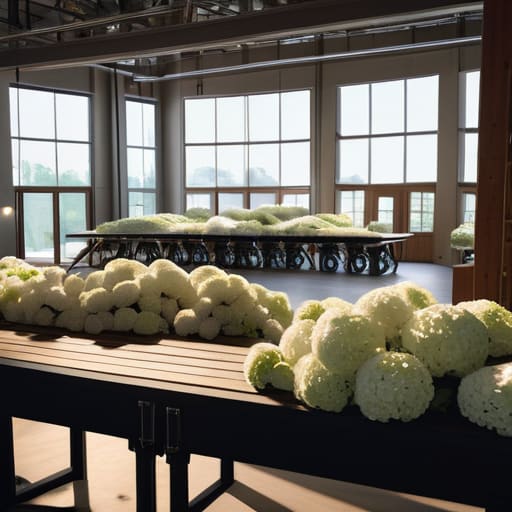
Before the first guest arrives or the first florist arrives to drop off three hundred hydrangeas, you are in the trenches of the pre-production planning stages. This is where most people think they are “planning a party,” but in reality, you are building a framework to prevent a total collapse. I’ve seen enough weddings turn into frantic scrambles because someone assumed the lighting rig could be set up in twenty minutes while the caterers were trying to navigate the same narrow corridor. You need to treat your setup like a professional film production timeline; every single movement of equipment, every delivery window, and every vendor arrival must be mapped against the clock.
The secret isn’t just knowing what is happening, but where it is happening in relation to everything else. This is where true resource allocation in production comes into play. If you have three different teams all needing access to the service lift at 11:00 AM, you don’t have a schedule; you have a bottleneck. I always tell my team that if you haven’t accounted for the physical footprint of your suppliers, your plan is just a wish list. You need to map out the flow of people and gear so that the logistics work for you, rather than against you.
Resource Allocation in Production Budgeting for the Unseen Needs
When people talk about budgeting, they usually mean the big stuff: the florist, the band, the premium bar package. But if you’re only budgeting for what looks good in the brochure, you’re already losing money. True resource allocation in production means accounting for the invisible friction. It’s the extra hands needed to move fifty banquet chairs in a twenty-minute window, or the contingency fund for the lighting technician who realizes the venue’s power supply can’t handle both the DJ and the industrial coffee machine. If you haven’t budgeted for the “just in case” staff, you aren’t planning; you’re just hoping.
I’ve seen too many schedules fall apart because someone treated a production workflow optimization like a suggestion rather than a rule. You need to assign resources—people, equipment, and time—to the transitions, not just the main events. A wedding isn’t a series of static moments; it’s a moving target. If your plan doesn’t account for the physical space a catering team needs to prep, or the specific timing required for a room flip, your budget will bleed out through emergency rentals and overtime pay. Plan for the gaps, not just the highlights.
The Five Logistical Landmines Your Schedule Needs to Defuse
- Build in ‘buffer bloat’ for every transition. If you think it takes fifteen minutes to move a hundred people from the ceremony to the drinks reception, budget twenty. People linger, they stumble, and they stop to take photos; if your schedule is a tight sequence of one-minute increments, you aren’t planning an event, you’re planning a disaster.
- Work backwards from the licence end, not forwards from the start. I don’t care if the cake cutting is “supposed” to happen at 10 PM; if the music has to stop at 11 PM and the last car needs to be off-site by 11:30, your schedule needs to reflect that hard stop. Every minute you lose in the afternoon is a minute stolen from the end of the night.
- Map the caterer’s footprint, not just the guest’s. A production schedule that only accounts for when the food is served is half-baked. You need to schedule the “invisible” movements: when the heavy trays arrive, when the kitchen staff needs access to the service lift, and exactly how much time they have to clear the room before the next movement begins.
- Assign a single point of truth for timing. If the florist thinks the tables are being set at 2 PM and the venue manager thinks they are being set at 4 PM, you have a collision course. Your schedule needs to be a live document that everyone—from the AV tech to the wedding coordinator—is looking at, because “I thought you meant…” is the most expensive phrase in hospitality.
- Factor in the “Human Variable” for speeches. Everyone thinks a speech is a five-minute slot on a spreadsheet. In reality, it’s a ten-minute slot that includes the time it takes for a drunk uncle to find his glasses, the time for the toast to be poured, and the inevitable roar of applause that eats your window. Plan for the person, not the script.
The Final Countdown
At the end of the day, a production schedule isn’t just a fancy document to show off during a site visit; it is your primary defense against the inevitable friction of a live event. We have covered the heavy lifting—from the pre-production groundwork that keeps you from playing catch-up, to the resource allocation that ensures your caterer isn’t fighting for a single power socket in a dark corner. If you get the timings right, if you account for the unseen logistics, and if you respect the hard stop of your licence end, you have already won half the battle. You aren’t just managing a timeline; you are managing the energy of the room by ensuring no one is left standing around waiting for a transition that should have happened twenty minutes ago.
People will tell you that the magic of an event lies in the spontaneous laughter or the perfect lighting, and while that’s true, that magic can only happen if the floor is solid beneath it. My job—and now yours—is to build that floor. When you nail the schedule, the guests don’t see the frantic turnaround or the precise movement of the service staff; they only see an evening that feels effortless and seamless. That is the ultimate goal: to work so hard on the invisible architecture of the day that the people experiencing it never even realize it was there. Now, get your timings checked, count back from the end, and get to work.
Frequently Asked Questions
How do I build a buffer into the schedule for when a vendor inevitably runs late without throwing off the entire evening's timeline?
You don’t build a buffer by adding “extra time” at the end; you build it by padding the transitions. I never schedule a vendor arrival right before a milestone. If the florist is due at 11:00, they’re on the schedule for 10:00. You bake twenty-minute “ghost slots” into the gaps between the ceremony, the cocktail hour, and the first course. If they’re late, you’re just running on the ghost time. If they’re on time, you’ve just bought yourself a quiet coffee.
At what point does a production schedule become too rigid to handle the actual, unpredictable human element of a wedding or event?
It becomes too rigid the moment you treat the schedule like a religious text rather than a living document. If your timeline doesn’t have “buffer air”—fifteen-minute gaps for the inevitable late uncle or the florist’s van getting stuck in traffic—it’s not a plan; it’s a trap. A good schedule manages the logistics, but it shouldn’t suffocate the atmosphere. If you’re chasing minutes instead of managing flow, you’ve lost the room.
How do I communicate these timings to my clients so they understand the necessity of the schedule without feeling like I'm sucking the joy out of their big day?
Don’t sell it as a checklist; sell it as a safety net. When I talk to a couple, I don’t say, “Here is the rigid timeline you must follow.” I say, “This schedule is how we protect your time.” I explain that the buffer between the ceremony and the drinks reception isn’t just dead air—it’s the breathing room that ensures they aren’t rushing through their first dance because the kitchen is running ten minutes behind. You aren’t killing the joy; you’re building the fence that keeps the chaos out.