If you think “how security is arranged” means hiring a wall of men in black suits to stand like statues by the entrance, you’re about to spend a lot of money to look ridiculous. I’ve seen it a dozen times: a couple pays a premium for a heavy-handed presence, only to have those guards become a literal human roadblock for the elderly aunt trying to find the cloakroom or the caterer attempting a delicate tray-service maneuver. Real security isn’t about intimidation or looking like a high-stakes summit; it’s about the invisible math of managing people so that the flow of the evening stays seamless and nobody feels like they’re being policed at their own party.
I’m not here to sell you on fancy agencies or overpriced tactical gear. What I am going to give you is the unvarnished truth about how you actually structure a team to protect your licence and your guests without killing the vibe. We’re going to talk about placement, the crucial difference between a door man and a floor walker, and how to ensure your security presence is felt through orderly transitions rather than heavy-handed intervention.
Table of Contents
Risk Assessment and Mitigation Planning for the Uninvited Guest
Most people think a risk assessment is just a clipboard-wielding bureaucrat ticking boxes to satisfy an insurance company. In reality, it’s the art of predicting exactly how a celebratory atmosphere can sour in under ninety seconds. When I’m looking at risk assessment and mitigation, I’m not just looking at fire exits; I’m looking at the proximity of the bar to the dance floor and the specific moment the heavy drinkers start eyeing the exit. You have to plan for the “uninvited guest”—whether that’s a drunk uncle who thinks he’s a DJ or a stranger who wandered in through the service entrance because the side gate wasn’t latched.
Effective security deployment strategies aren’t about having a wall of muscle; they are about positioning. If your team is all bunched up by the front door, they’re useless when a rowty situation erupts near the buffet at 11:15 PM. I tell my team that visibility is a deterrent, but placement is a solution. You need eyes on the transitions—the awkward gaps between the speeches and the first dance—where the energy shifts and the logistics of crowd control become a live, breathing challenge.
Security Deployment Strategies More Than Just a Man at the Door
If you think security is just about hiring a bloke in a high-vis vest to stand by the fire exit, you haven’t been paying attention. Real security deployment strategies are about positioning. It’s about knowing that the most vulnerable moment of any wedding isn’t the ceremony; it’s the thirty-minute window when the bar opens and the champagne starts flowing. You don’t just “place” people; you map the friction points. I look for the bottlenecks—the narrow corridor between the lounge and the terrace, or that one dark corner of the car park where the lighting is rubbish. You want your team distributed so they are managing the energy of the room, not just watching for trouble.
This starts long before the first guest arrives. I don’t care how experienced a guard claims to be; if they haven’t sat through my security personnel briefing protocols, they aren’t on my floor. A good briefing isn’t a lecture; it’s a tactical walkthrough of the night’s specific rhythms. They need to know exactly when the speeches start, which VIPs shouldn’t be approached, and—most importantly—the precise moment the licence ends so they can begin the invisible transition from party mode to “please head towards the exits” without killing the vibe.
The Real-World Math of Managing a Crowd
- Stop thinking about “guards” and start thinking about “choke points.” You don’t need a man in a suit standing in the middle of a ballroom; you need him positioned exactly where the bar meets the dance floor, because that’s where the tension builds when the queue gets too long and the drinks run low.
- Match your deployment to your timeline, not your budget. A security setup that works for a seated three-course dinner is useless for the hour after the bar opens. You need to scale the presence up exactly forty-five minutes before the “party mode” kicks in, or you’ll be playing catch-up when the energy shifts.
- The “Invisible Perimeter” rule. The best security arrangement is one where the guests don’t feel watched, but the staff feel protected. This means positioning personnel at the transition points—the service entrances, the loading bays, and the side exits—rather than making them a permanent fixture of the guest experience.
- Communication isn’t just a radio; it’s a shared understanding of the “Exit Clock.” Every member of the security team needs to know the exact minute the licence ends. If they don’t know the countdown, they can’t manage the gradual, controlled dispersal of a crowd that suddenly realizes the music is about to stop.
- Plan for the “Uninvited Relative” factor. Most people think security is for preventing break-ins, but in my experience, it’s about managing the person who has a legitimate invite but an illegitimate attitude. Arrange your staff so they have clear sightlines to the guest list desk, allowing them to spot the “unauthorized VIP” before they’ve even reached the first round of drinks.
The Final Countdown: Why the Math Matters
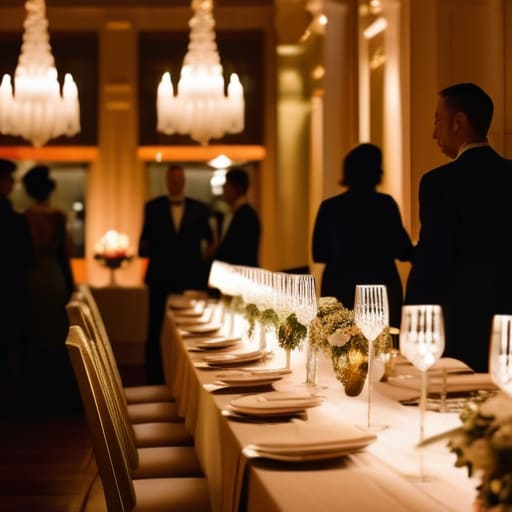
At the end of the day, arranging security isn’t a checkbox exercise you tick off to satisfy an insurance provider; it is the invisible architecture that keeps the evening from collapsing. We’ve looked at the risk assessments, the deployment strategies, and the subtle art of managing flow without making your guests feel like they’re entering a high-security prison. If you get the access points right, the staffing levels aligned with your peak service times, and the communication loops tight, security becomes a ghost. It is there, working the math of the room, ensuring the transition from dinner to dancing doesn’t turn into a bottleneck of frustrated guests and overwhelmed staff. When the security is arranged properly, it’s the one thing you shouldn’t even notice.
My advice? Stop looking at security as a cost to be trimmed and start seeing it as the foundation of your event’s rhythm. You can have the most expensive floral installations and the finest catering in the city, but if you haven’t accounted for the logistics of human movement, the whole thing will feel fractured. A well-managed event is a masterpiece of controlled chaos, and a solid security plan is what allows that control to exist. Plan for the worst, execute for the best, and always, always keep an eye on the clock. Because when the licence end approaches and the lights go up, the only thing you want your guests remembering is the magic, not the friction.
Frequently Asked Questions
How do I know if the security firm is actually qualified, or if they’re just sending me a couple of lads who look the part but don't know how to manage a crowd?
Don’t look at their uniforms; look at their paperwork. If they can’t produce a site-specific risk assessment or proof of SIA training faster than you can pour a glass of prosecco, walk away. You want to ask about their “incident management” and “crowd dynamics,” not just “how many guards.” If they talk about “muscle,” they’re amateurs. You want the firm that talks about de-escalation and flow. If they don’t understand the licence end, they aren’t professionals.
If I’ve already paid for a specific number of staff, can I adjust the deployment if the guest list suddenly shifts from a quiet corporate lunch to a rowdy wedding reception?
You can adjust the deployment, but you can’t adjust the physics of the room. If that corporate lunch turns into a wedding, you aren’t just changing the vibe; you’re changing the math. A quiet room needs a polite presence; a wedding needs crowd control and “bottleneck management” at the bar. Don’t just ask for more bodies—ask to reallocate them. Move staff from the perimeter to the high-friction zones before the first glass breaks.
At what point does "security" stop being about safety and start becoming a way for the venue to unnecessarily restrict the flow of the evening?
It stops being safety the moment the “security” becomes a barrier to the vibe rather than a guard against chaos. If your team is policing the guest list like they’re at a nightclub or treating a bridesmaid like a trespasser because she’s carrying a large floral arrangement, you’ve missed the mark. Security should be invisible math—managing flow so the bar doesn’t bottleneck—not a physical wall that makes your guests feel like they’re being processed.