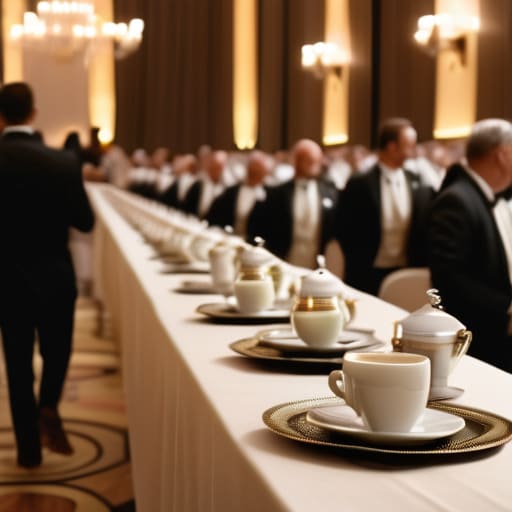
I once watched a high-end wedding planner spend forty minutes debating the shade of linen for a bridal brunch, while ten minutes later, a corporate client was staring at me in pure panic because their keynote speaker had no water and the buffet was stuck behind a decorative partition that blocked the entire service flow. People love to talk about the aesthetics, but if you want to understand how catering for corporate events differs, you have to stop looking at the menu and start looking at the clock. In the wedding world, a fifteen-minute delay is a “romantic moment of anticipation”; in a corporate setting, a fifteen-minute delay is a professional catastrophe that costs people money and kills the momentum of a multi-million pound deal.
I’m not here to sell you on seasonal micro-greens or the perfect plating of a Wagyu slider. I’m here to tell you about the unseen machinery that actually makes an event work. I’m going to pull back the curtain on the logistics—the power requirements, the strict dietary data, and the brutal reality of feeding two hundred hungry professionals in a tiny window before they head back to their laptops. We’re going to talk about the stuff the brochures ignore, so you can stop worrying about the flowers and start focusing on the flow of the room.
Table of Contents
Scaling Food Service for Large Conferences Without the Chaos
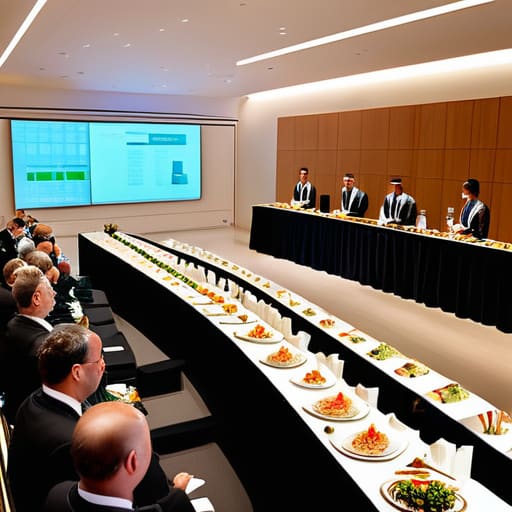
When you’re scaling food service for large conferences, you aren’t just ordering food; you are managing a human bottleneck. In a wedding, if a guest waits five minutes for a canapé, they’re too busy chatting to notice. In a corporate setting, if five hundred delegates are staring at an empty buffet line while their session timer ticks down, you’ve already lost the room. The secret to avoiding the chaos isn’t more food—it’s more flow. You need to stop thinking about the menu and start thinking about the math of movement.
This is where the business luncheon logistics get real. You cannot have a single, centralized station for a room of three hundred people unless you want a riot. I always tell clients to break the service into multiple, smaller satellite points. It’s about spreading the load so the line moves, rather than letting it stagnate. You also have to be ruthless with your corporate event catering budget planning; don’t sink all your money into truffle oil if you haven’t budgeted for the extra staff required to actually move the plates through the crowd.
The High Stakes of Managing Dietary Restrictions in Office Settings

In a wedding, if someone realizes they can’t eat the sea bass, it’s a quiet tragedy shared between a bride and a waiter. In a corporate setting, it’s a liability. When you are managing dietary restrictions in office settings, you aren’t just playing host; you are navigating a minefield of medical necessity and professional reputation. If a high-level stakeholder has an allergic reaction during a keynote because a gluten-free option was cross-contaminated by a rogue piece of sourdough, that isn’t just a catering fail—it’s a breakdown in professional event food service that stays on your record.
The mistake I see most often is treating dietary requirements like a checklist at the bottom of a spreadsheet. People think as long as there is a “V” or “GF” label, they’ve done their job. They haven’t. You have to account for the flow. If you have fifty people with specific needs, you cannot have them all queuing at the same station, hovering like they’re asking for a favor. You need a strategy for how those plates move so the business luncheon logistics don’t collapse under the weight of people feeling singled out or, worse, hungry.
The Logistics of the Lunch Hour: Five Real-World Truths
- Forget the “buffet” dream; in a corporate setting, you aren’t serving a meal, you are managing a surge. You have a hard window—usually forty-five minutes—where three hundred people suddenly realize they are starving at the exact same time. If your service flow doesn’t account for that bottleneck, you aren’t hosting a lunch, you’re managing a riot.
- Power is the invisible guest that ruins everything. In a wedding, we know where the sockets are. In a corporate conference room, you’re often fighting for a single outlet behind a podium. If your caterer shows up with three induction hobs and a coffee machine but you haven’t checked the circuit load, you’re going to be serving cold sandwiches in the dark.
- The “unspoken” menu rule is efficiency over flair. A wedding guest wants a culinary journey; a conference attendee wants to be able to eat a wrap with one hand while holding a notebook in the other. If the food requires a knife and fork and intense concentration, you’ve already lost the room to the next scheduled session.
- Trash management is the most underrated part of the contract. Weddings have staff to clear plates as they go, but corporate setups often rely on “self-service” stations. If you haven’t budgeted for a dedicated person to swap out bins every thirty minutes, your high-end networking event will quickly start to smell like a bin store by 2:00 PM.
- Timing isn’t a suggestion; it’s a hard wall. In my world, the licence end is the law, but in corporate events, the “next speaker” is the law. If the catering runs fifteen minutes late, you aren’t just late with the food—you’ve derailed the entire day’s agenda, and that’s a much harder person to apologize to than a bride.
The Bottom Line on Corporate Catering
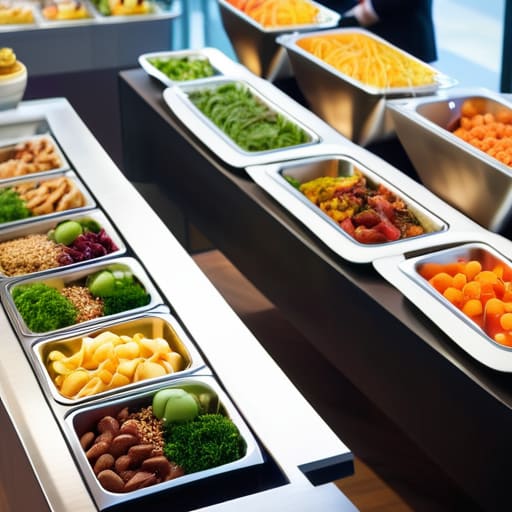
At the end of the day, if you treat a corporate lunch like a wedding reception, you are going to have a very expensive disaster on your hands. We have covered the sheer scale of conference service, the absolute necessity of getting dietary requirements right so you don’t have an executive fainting mid-keynote, and the way timing dictates everything from coffee refills to the dreaded mid-afternoon slump. It isn’t about the garnish or whether the napkins match the company logo; it is about the ruthless efficiency of the service. If the food isn’t ready when the session ends, or if the queue for the buffet stretches into the hallway, you haven’t just failed at catering—you have disrupted the entire business objective.
My advice? Stop looking at the menu and start looking at the floor plan and the clock. When you stop obsessing over the aesthetics and start focusing on the flow of people and the precision of the schedule, that is when the magic happens. A truly successful corporate event is one where the attendees don’t even notice the catering because it worked so seamlessly that it became invisible. Plan for the logistical friction, respect the hard stop of the licence or the session end, and remember that a well-timed sandwich is worth more than a thousand rose petals. The best events are the ones that run like clockwork.
Frequently Asked Questions
How much extra time do I actually need to build into the schedule for the transition from a keynote session to a buffet lunch?
If you’re planning for a twenty-minute transition, you’ve already lost. In my experience, you need forty-five, minimum. You have to account for the “keynote linger”—that inevitable ten minutes where people debate the speaker—plus the sheer physics of three hundred bodies moving toward a buffet at once. If you don’t budget that buffer, your lunch service starts late, your delegates get cranky, and your schedule is dead before the first salad hits the table.
What's the real-world impact on my budget when I switch from a plated meal to a more "efficient" finger food setup?
Everyone thinks switching to finger food is a budget hack, but they forget the labor. You’re trading the cost of a seated service for a massive increase in food volume and staff hours. You can’t just put out a tray of sliders and call it a day; you need more hands to circulate, more staff to clear the endless mountain of tiny plates, and significantly more expensive ingredients to ensure “small” doesn’t mean “starving.”
How do I handle a caterer who shows up with a massive footprint when my venue's floor plan is already tight with AV equipment and seating?
You don’t “handle” them; you preempt them. If your floor plan is already a jigsaw puzzle of AV racks and banquet tables, a caterer showing up with a three-metre prep footprint is a disaster waiting to happen. I stop this at the contract stage. I demand a technical rider before they even book. If they can’t fit their kit into the CAD drawing I’ve sent, they don’t get the gig. Measure twice, or prepare to move chairs mid-service.