
I was standing by the service entrance last Saturday, checking the clock against our 12:00 AM licence end, when I saw a videographer attempt to navigate a heavy tripod through a narrow gap between the buffet table and a very expensive floral installation. It was a slow-motion disaster waiting to happen. Most wedding blogs will tell you that videography is about capturing “raw emotion” and “cinematic storytelling,” but they never mention the physical reality of it. They don’t tell you that understanding how videography works at weddings is actually about spatial awareness, power access, and ensuring a lens doesn’t become a permanent fixture in the middle of your guests’ sightlines.
I’m not here to sell you on dream sequences or expensive slow-motion montages. I’ve managed nine hundred weddings, and I know that a beautiful film is useless if the crew is constantly tripping over the caterers or blocking the view of the person giving the speech nobody asked for. In this guide, I’m going to strip away the fluff and talk about the actual logistics—from where they need to plug in their gear to how they manage the transition from ceremony to cocktail hour without becoming a human obstacle.
Table of Contents
Mastering the Wedding Film Production Timeline
Most couples think the videographer just turns up, hits record, and magic happens. In reality, a successful wedding film production timeline is a game of chess played against the clock. If your hair and makeup run forty minutes late, you aren’t just delaying the photos; you are eating into the golden hour light that the filmmaker needs for those cinematic shots. I’ve seen more than a few schedules collapse because nobody accounted for the transit time between the ceremony site and the reception hall. You have to build in “buffer zones”—empty slots where nothing is scheduled—to absorb the inevitable chaos of a wedding party trying to move sixty people through a narrow corridor.
You also need to realize that the wedding videographer shot list isn’t just a wishlist of pretty moments; it’s a logistical map. They need to know exactly when the heavy lifting happens, like the wedding video equipment setup, so they aren’t tripping over power cables during your first dance. If you don’t coordinate their arrival with your key transitions, you’ll end up with a beautiful highlight reel that completely misses the actual tension of the exchange of vows.
The Wedding Video Equipment Setup and Spatial Constraints
Here is the reality: most couples fall in love with a specific aesthetic, but they forget that a videographer isn’t a ghost; they are a person with heavy bags and a need for floor space. When we talk about wedding video equipment setup, we aren’t just talking about cameras; we’re talking about tripods, lighting rigs, and those long cables that become literal trip hazards for your Great Aunt Sheila. If you’ve booked a boutique venue with narrow corridors or a dining room that’s already tight because the caterer needs every inch for the service, you have a spatial conflict on your hands.
I’ve seen too many beautiful setups ruined because the videographer was squeezed into a corner where they couldn’t actually move. You need to account for their “footprint.” If they are trying to manage multiple wedding cinematography styles—switching from a wide static shot to a handheld follow-cam—they need room to breathe. If you don’t map out where they’ll sit during the speeches, they’ll end up right in the middle of the aisle or, worse, blocking the view of the guests who actually paid to be there.
Five Real-World Logistics for Your Video Team (That Aren't in the Contract)
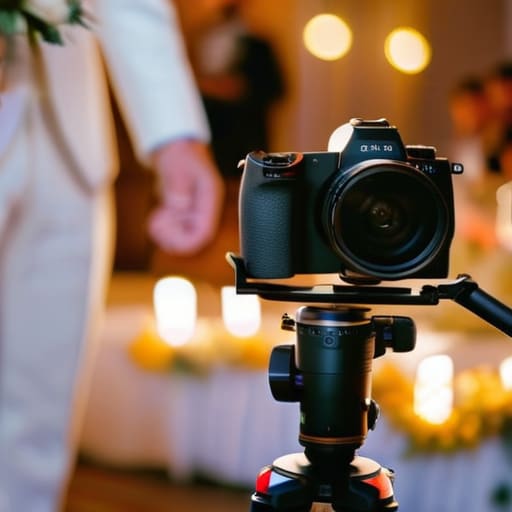
- Watch your transitions, not just the shots; if your videographer is moving from the ceremony to the cocktail hour at the same time the bar service starts, they are going to be fighting for the same three square metres of floor space as your guests.
- The lighting isn’t just about “mood”—it’s about physics; if you’re planning a sunset ceremony in a spot with zero power access, ensure your videographer has enough battery life and portable lighting to bridge that gap before the reception begins.
- Respect the “Golden Hour” window like it’s a hard licence end; if your schedule allows for a 75-minute dinner with no buffer, you are mathematically guaranteeing that your videographer will miss the best light of the day because they were stuck waiting for a waiter to clear a plate.
- Audio is the silent killer of wedding films; a beautiful shot of the vows is worthless if the videographer is standing ten feet away from a speaker system that’s humming or a guest who decided that’s the perfect moment to start a loud conversation.
- Map out the “movement corridors” during your floor plan review; you need to know exactly where the videographer is going to be standing during the first dance so they aren’t inadvertently blocking the path of the catering staff or the grandmother trying to get to the exit.
The Final Countdown

At the end of the day, a wedding film isn’t just about a fancy lens or a slow-motion shot of a veil; it is the result of a thousand tiny, invisible logistical victories. If you’ve managed the timeline so the videographer isn’t tripping over the catering staff during the main course, and you’ve cleared enough floor space so they aren’t filming through a forest of cocktail tables, you’ve already won half the battle. Remember that the best footage happens when the tech stays out of the way of the actual experience. You have to respect the power limits, the spatial constraints, and—most importantly—the unyielding rhythm of the event schedule to ensure the person behind the camera is a ghost, not a guest.
I’ve seen enough weddings to know that when the lights go down and the licence end approaches, the only thing that truly matters is how the day felt. The gear, the setups, and the lighting rigs are just the scaffolding; the wedding itself is the building. When you plan for the logistics instead of just the aesthetics, you create the breathing room necessary for those genuine, unscripted moments to actually happen. Don’t just plan for the beautiful shots; plan for the movement of people, and the film will take care of itself.
Frequently Asked Questions
How do I stop the videographer from hovering like a ghost during the speeches and ruining the actual moment?
You don’t stop them with a polite request; you stop them with a floor plan. If your speech layout has the mic stand right next to the only available power outlet, the videographer is going to park themselves right in your peripheral vision. Designate a “media zone” during your briefing. Tell them exactly where the sightlines are. If you give them a clear, unobstructed angle from the start, they won’t feel the need to hunt for one mid-toast.
If we have a tight turnaround between the ceremony and the reception, is there actually enough time for them to move gear without blocking the guests?
If you’re running a tight turnaround, you aren’t just fighting the clock; you’re fighting physics. If the ceremony is in the same room as the reception, you have exactly zero margin for error. Unless your videographers are moving like a tactical unit, they will be in the way. You need a designated “staging zone” out of sight, or they’ll end up tripping over a flower girl while trying to find a power outlet.
What happens to the footage if the venue's lighting is terrible or if the power supply for the extra lights isn't where it needs to be?
If the lighting is rubbish or the power outlets are buried behind a heavy velvet curtain three rooms away, you aren’t just looking at “moody” footage—you’re looking at expensive digital noise and a videographer playing a frantic game of extension cord roulette. If they can’t power their kit, they can’t fix the shadows. I’ve seen it happen: the sun goes down, the power fails, and suddenly your cinematic wedding looks like a grainy CCTV feed.