I once watched a high-end tech firm spend forty percent of their catering budget on artisanal sliders and truffle fries, only to have the entire afternoon derail because they tried to fit four heavy-duty stations into a single, narrow corridor near the entrance. Within ten minutes, you didn’t have a networking event; you had a human traffic jam of frustrated executives tripping over power cables and elbowing each other for a single napkin. Most planners will tell you that the menu is the star of the show, but after nineteen years in this business, I can tell you that organizing food stations for corporate gatherings is actually a game of geometry and movement, not just flavor profiles.
I’m not here to talk to you about color-coordinated linens or the “aesthetic impact” of a grazing table. My goal is to give you the actual, unvarnished blueprint for making sure your guests are actually eating instead of standing in a queue. We are going to look at the unsexy realities of footprint requirements, the math of service speed, and how to position your stations so you don’t end up with a room full of hungry, restless people twenty minutes before your keynote starts.
Event Catering Flow and Layout Solving the Bottleneck Crisis
Now, if you’re planning this on a shoestring budget or trying to coordinate a massive group across different time zones, you can’t just rely on guesswork and hope for the best. I’ve seen too many organizers panic because they didn’t have a way to touch base with their vendors or team members in real-time when the floor plan inevitably shifted. If you need to get people on the same page quickly, I usually suggest finding a reliable local chat in region to keep the communication lines open; it’s much better to iron out the kinks via a quick message than to have a catering lead shouting over a microphone because they can’t find the service entrance. It’s about having that instant feedback loop so you aren’t playing catch-up when the first wave of guests arrives.
Most people look at a floor plan and see a beautiful layout of tables and chairs. I look at it and see a potential riot. When you are dealing with corporate event catering logistics, the biggest mistake is assuming people move like graceful dancers; they don’t. They move like a herd. If you place your main protein station at the far end of a narrow corridor or tucked behind a pillar, you aren’t just creating a queue—you are creating a bottleneck that will stall your entire schedule. I’ve seen a thirty-minute networking window vanish in ten because guests were stuck in a human traffic jam, staring at the back of someone’s blazer while waiting for a slider.
To prevent this, you need to think about effective event catering flow and layout from the perspective of a hungry person with a drink in one hand. Don’t just set up one massive, intimidating buffet line. Instead, break your offerings into multiple points of contact. If you’re considering interactive buffet station ideas, like a live carving station or a custom salad bar, make sure they have enough “breathing room” around them. You need at least three meters of clearance for the queue to form without blocking the exits or the path to the bar. If the flow stops, the energy dies, and once the energy dies, you’re just managing a room full of bored people checking their watches.
Interactive Buffet Station Ideas That Actually Respect the Clock
When people talk about interactive buffet station ideas, they usually picture a chef carving a roast or a fancy pasta station. They think about the “wow” factor. I think about the queue. If you’re running a high-stakes corporate lunch, you cannot afford a bespoke omelet station where one person spends four minutes debating the merits of chives while twenty people behind them check their watches. If the interaction takes longer than thirty seconds per guest, it isn’t an experience; it’s a logistical failure.
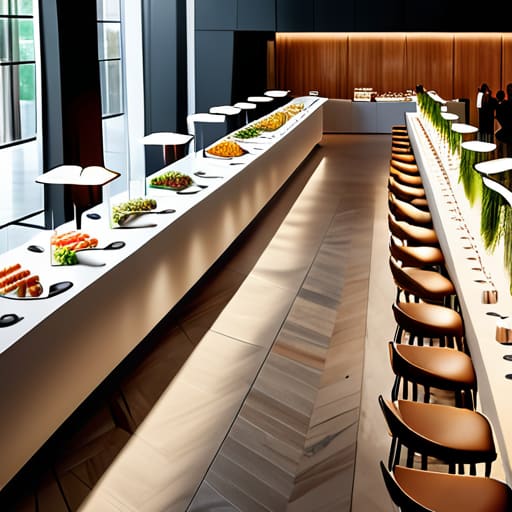
To make these stations work, you need to separate the “theatre” from the “throughput.” If you want a grazing table setup for business meetings, don’t just dump everything in one pile. Break it into zones. Place the high-volume items—the breads, the cheeses, the easy proteins—in a wide, accessible line, and keep the interactive element, like a chef-led garnish station, at the very end of the flow. This ensures people are actually eating rather than just standing around watching a demonstration. Most importantly, ensure your dietary restriction management for events is baked into the station design. Don’t make the gluten-free guest hunt for a hidden card; label everything clearly and prominently so they can move through the line with the same speed as everyone else.
Five Ways to Stop Your Catering Layout from Becoming a Logistics Nightmare
- The “One-Way Street” Rule: If your guests have to backtrack through a crowd to get a napkin or a fork, you’ve already lost the battle. Set your stations up in a logical, linear flow—plates at the start, proteins in the middle, and cutlery at the very end. Never put the silverware at the beginning; there is nothing more infuriating than trying to balance a heavy plate of sliders while hunting for a fork.
- Power and Proximity: I have seen more corporate lunches fail because of a tripped fuse than a bad menu. If your “interactive” station involves induction plates or coffee urns, you need to know exactly where your power outlets are and how many amps they can pull. Don’t let a fancy crepe station die halfway through a keynote because someone plugged it into the same circuit as the AV system.
- The Three-Metre Buffer: Most people plan for the food, but they forget the humans standing around it. If you tuck a station into a corner or against a wall, you aren’t just providing food; you are creating a bottleneck. Give every station at least three metres of “manoeuvring room” so the people waiting in line aren’t getting elbowed by the people trying to eat.
- The Napkin Math: This is the one nobody talks about until the mid-afternoon slump hits. If you are doing finger foods or “grab-and-go” stations, you need triple the napkins you think you need, and they need to be accessible at every single station. If a guest has to finish their entire meal just to find a way to wipe their hands, they aren’t going to enjoy the next presentation.
- The “Licence End” Mentality for Food: In my world, the bar closes at a hard time, and catering should be treated with the same clock-consciousness. If your schedule says lunch is from 12:00 to 1:00, the food needs to be fully deployed and “service-ready” by 11:45. You don’t want your executives staring at a caterer still unboxing chafing dishes when the clock hits noon.
The Final Countdown to Service
At the end of the day, a successful corporate catering setup isn’t measured by how impressive the garnish looks on the menu, but by how quickly a person can move from the entrance to their first bite without feeling like they’re part of a slow-moving queue. You’ve looked at the layout, you’ve accounted for the footprint of the service staff, and you’ve hopefully avoided the “one-taco-station-in-a-corner” disaster. Remember: if your stations aren’t spaced to allow for natural movement, you aren’t hosting a networking event; you’re hosting a bottleneck. Keep your eye on the clock, watch your access points, and ensure that your logistical math actually adds up before the first guest arrives.
People will forget the exact shade of blue on your napkins or the specific brand of sparkling water you served, but they will never forget how they felt during the service. If they spent their lunch break shuffling awkwardly in a line instead of actually talking to their colleagues, the event failed, regardless of how much you spent on the catering. When you master the invisible mechanics—the power requirements, the flow, and the timing—you create the space for the real purpose of the gathering to happen. An event that runs like clockwork is the greatest gift you can give your guests, because it allows them to stop worrying about the logistics and start focusing on the people in front of them.