
I once watched a bride spend four grand on a bespoke, floral-draped gazebo for an outdoor ceremony, only to spend the entire reception huddled under a leaking plastic marquee because she hadn’t factored in the wind. Everyone talks about “Plan B” as if it’s just choosing a different pretty backdrop, but they never tell you that how weather contingency works for weddings is actually a brutal exercise in spatial mathematics and timing. It isn’t about whether the flowers look good in the rain; it’s about whether your eighty guests can navigate a slippery gravel path to get to the bar before the ceremony ends and the licence clock starts ticking.
I’m not here to sell you on aesthetic backups or “dreamy” indoor alternatives that look nothing like your Pinterest board. I’m going to tell you how to actually build a fail-safe plan that accounts for the unphotogenic reality of a sudden downpour. We’re going to talk about floor space, service flow, and the logistical nightmare of moving a hundred chairs in ten minutes. If you want the truth about keeping your event from turning into a chaotic scramble, you’re in the right place.
Table of Contents
The Wedding Venue Weather Policy Reading the Fine Print

Don’t just sign the contract because the font looks pretty; you need to hunt down the specific wedding venue weather policy buried in the fine print. Most couples think a “backup plan” means moving the ceremony from the lawn to the garden room. In reality, it’s often much more complicated. I’ve seen plenty of contracts that promise a “Plan B,” but fail to mention that the transition requires moving two hundred chairs, three floral installations, and a buffet station in under twenty minutes. If the contract doesn’t explicitly state who is responsible for the physical move—the venue staff or your hired planners—you’re looking at a logistical nightmare when the clouds turn grey.
You also need to look for the “trigger point.” A good contract defines a clear wedding day weather decision timeline. I don’t want to be standing in the middle of a reception, watching the barometer drop, while the couple is still arguing about whether it’s “just a drizzle” or a downpour. You need a hard deadline—say, four hours before the first guest arrives—where the call is made and the pivot happens. Without that clarity, you aren’t planning a wedding; you’re just gambling with the forecast.
The Wedding Day Weather Decision Timeline When to Call It

The biggest mistake I see is couples waiting until the morning of the wedding to check the clouds. By then, you aren’t planning; you’re panicking. A proper wedding day weather decision timeline needs to be baked into your contract months in advance. You need a hard “go/no-go” time—usually 24 to 48 hours before the first guest arrives. If you’re waiting until the ceremony is supposed to start to decide if the bar should move under the awning, you’ve already lost the battle.
The decision isn’t just about “will it rain?” It’s about logistics. I’ve seen weddings where the sky is clear, but the ground is a saturated sponge that will ruin a silk hem in seconds. When you trigger your outdoor wedding backup plan, you aren’t just moving chairs; you are reconfiguring the entire flow of the event. You have to account for the extra time it takes to move the sound system, the buffet, and the elderly aunt who can’t navigate a muddy path. If your Plan B doesn’t account for the physical movement of people and gear, it isn’t a plan—it’s a disaster waiting to happen.
Five Real-World Logistics for When the Sky Falls
- Stop planning for “light drizzle” and start planning for “wet feet.” A contingency plan isn’t just about moving the ceremony inside; it’s about whether your guests can navigate a gravel path in heels or if you need to hire a literal carpet of mats so the bride doesn’t slide into the buffet.
- The “Plan B” layout must be a working floor plan, not a dream. If you move the cocktail hour from the lawn to the foyer, check the math: do you actually have enough square footage for sixty people to hold a glass and a canapé without someone getting elbowed in the ribs?
- Audit your power requirements before you move indoors. If the rain forces the band from the marquee into the main hall, that’s a sudden surge in demand for sockets and lighting that your original setup didn’t account for. Don’t be the person blowing a fuse twenty minutes before the first dance.
- Factor in the “unseen” transition time. Moving a hundred people from an outdoor setting to an indoor one doesn’t happen in five minutes. You need to build a buffer into your timeline—usually about thirty minutes of “dead air”—to account for the chaos of umbrellas, damp coats, and the inevitable slow-moving relative.
- Your caterer needs to know the weather plan as well as you do. If the plan shifts from a seated garden lunch to an indoor buffet, they need to know if they have the service space to execute it. A beautiful menu falls apart if the waiter can’t find a clear path through a crowded room to get the plates to the table.
The Bottom Line on Bad Weather
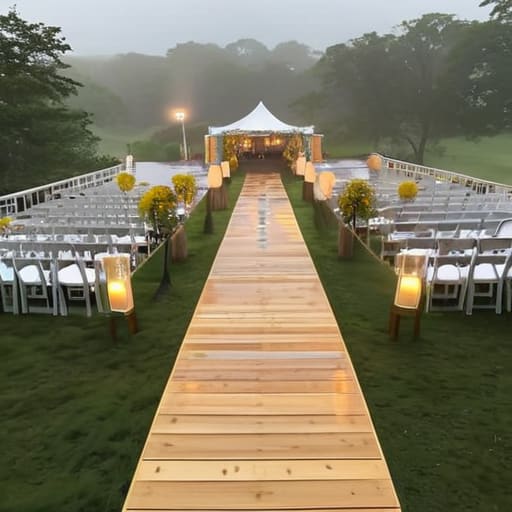
At the end of the day, a weather contingency isn’t a luxury add-on; it is the structural integrity of your entire schedule. You have to look past the Pinterest boards and account for the reality of the contract terms, the hard cut-off times for making a call, and the physical movement of people and equipment. If you haven’t mapped out how your guests get from a sodden ceremony site to a dry reception without looking like they’ve just survived a shipwreck, your plan isn’t finished. Remember, the goal isn’t just to stay dry—it’s to ensure that the logistical pivot doesn’t eat up the forty-five minutes you actually needed for the first course to hit the tables.
I’ve stood in the wings of venues during torrential downpours, watching couples realize that the “Plan B” they ignored is currently saving their sanity. When the clouds break and the wind picks up, the guests won’t remember if the ceremony was under a canopy or a marquee; they will remember if they were cold, wet, and waiting for a drink that never came. If you do the math now and build in the buffers, the weather becomes just another detail in the timeline rather than a disaster. Plan for the rain so you can actually enjoy the sunshine when it finally decides to show up.
Frequently Asked Questions
If we move the ceremony indoors at the last minute, who is actually responsible for the cost of shifting the decor and the extra chairs?
Look, I’ll give it to you straight: if it isn’t in your contract, you’re paying for it. If you’re the couple, you’re likely on the hook for the extra labor. Moving fifty chairs and re-arranging floral installations isn’t magic; it’s man-hours. Unless your venue contract specifically includes a “weather pivot” clause that covers staff reallocation, expect a surcharge. Don’t blame the venue for the chaos—blame the fine print you didn’t read.
How do we handle the guest flow if the "Plan B" space is significantly smaller than the outdoor setup we originally booked?
This is where the “pretty” plan meets the floor plan. If your Plan B is a cramped indoor room compared to a sprawling lawn, you don’t have a weather problem; you have a bottleneck problem. You have to stop thinking about “seating” and start thinking about “flow.” Trim the guest count for the cocktail hour, move the bar away from the entrance to prevent a crush, and for heaven’s sake, don’t let the caterers try to squeeze a buffet into a corner meant for a single table.
At what point does a "slight drizzle" become a formal trigger for the contingency plan, and who makes that final call?
The “slight drizzle” becomes a problem the moment your guest list stops being able to walk from the ceremony to the bar without looking like they’ve been through a car wash. If your plan involves moving fifty people and three delicate floral arrangements through a side door in ten minutes, you’ve already hit the trigger. As for the call? It’s usually the venue manager. I’m the one staring at the clouds and the licence end, knowing exactly how much time we lose if we pivot late.