I’ve spent eighteen years watching wedding planners present these beautifully designed, pastel-coloured PDFs that look like works of art but function like a disaster movie in slow motion. They’ll give you a “complete guide to running orders” that focuses on when the bride walks down the aisle or when the cake is cut, but they completely ignore the actual mechanics of the day. They don’t tell you that if your speeches run twenty minutes over, your hot food is going to be lukewarm by the time it hits the table, or that you haven’t left enough time for the caterers to clear the plates before the first dance. A running order isn’t a decorative timeline; it’s a tactical battle plan designed to stop your event from collapsing under its own weight.
I’m not here to sell you on the aesthetic of a seamless event; I’m here to show you how to build one. In this guide, I’m stripping away the fluff to give you the hard truths about transition times, buffer zones, and the unseen logistics that actually keep a venue from descending into chaos. We are going to look at the gaps between the moments—the parts nobody photographs—to ensure that when your licence ends, you’re finishing on a high rather than scrambling to get people out the door.
Table of Contents
Mastering Event Production Scheduling Before the First Guest Arrives

Most people think the real work starts when the doors open, but if you’re waiting for the first guest to arrive to figure out your rhythm, you’ve already lost. True event production scheduling happens in the quiet, frantic hours while the room is still being set. I’ve seen too many coordinators walk into a room at 2:00 PM with a printed timeline that has zero regard for the physical reality of the space. You need to account for the “dead time”—the window where the florist is still wrestling with a centerpiece while the AV team is trying to run cables through a doorway that’s too narrow.
Before a single person steps onto the floor, your show flow documentation needs to be more than just a list of times; it needs to be a blueprint for movement. This means knowing exactly when the lighting transitions from “bright and functional” to “moody and dinner-ready,” and ensuring your technical cue sheets are actually being read by the people holding the faders. If you haven’t mapped out the logistical friction of moving a microphone from a podium to a dance floor, you aren’t planning an event—you’re just hoping for the best.
Show Flow Documentation Mapping the Gaps Between the Magic
If the running order is your map, then show flow documentation is the granular detail that prevents people from walking into walls. Most people think a schedule is just a list of times: 7:00 PM Speeches, 7:30 PM Cake Cutting. That’s a wish list, not a plan. Real show flow documentation accounts for the “dead air”—those awkward, yawning gaps where the DJ is fumbling with a wireless mic and the guests are staring at their empty glasses wondering if the kitchen has gone on strike. You need to map out exactly what happens in the silence.
This is where you bridge the gap between the “magic” and the mechanical reality. I’m talking about the unseen hand that coordinates the transition from a seated dinner to a high-energy dance floor. You need to account for the technical hand-offs: when the lighting shifts from warm amber to club blue, or when the AV tech needs to switch inputs for a surprise slideshow. Without clear technical cue sheets, you aren’t running an event; you’re just hoping for the best, and in my experience, hope is not a logistical strategy.
The Five Survival Rules for When the Schedule Meets Reality
- Build in the ‘Buffer of Doom’ between every major transition. If you think the wedding party needs ten minutes to move from the ceremony to the drinks reception, give them twenty. People move slower than your spreadsheet thinks they do, especially when they’re holding a glass of Prosecco and trying to avoid an awkward conversation with an aunt.
- Work backwards from the licence end, not forwards from the arrival time. I don’t care if the speeches are heartfelt; if the music has to stop at midnight, your final dance needs to be scheduled for 11:40 PM. If you plan your night based on when you want things to start, you’ll end the evening with a room full of hungry guests and a very unhappy local council.
- Account for the ‘Caterer’s Footprint.’ A running order that says ‘Dinner: 7:00 PM’ is useless. You need to schedule the kitchen’s arrival, the plating time, and the actual service window. If your schedule doesn’t leave space for the catering team to actually get their equipment into the room without walking through the middle of your cocktail hour, your ‘seamless’ event is going to feel like a construction site.
- Identify your ‘Single Points of Failure.’ Look at your timeline and find the moments where one delay ruins everything—like the photographer being late or the florist getting stuck in traffic. For every high-stakes moment, have a ‘Plan B’ timestamp. If the speeches run ten minutes over, you need to know exactly which subsequent item you are going to trim to keep the night on track.
- Print it on paper, not just your phone. I’ve seen more events fall apart because a coordinator’s phone died or they lost signal in a stone-walled venue than I have because of bad catering. Every key stakeholder—the DJ, the floor manager, the lead server—needs a physical, laminated copy of the timeline. Digital is for planning; paper is for when the chaos actually starts.
The Final Countdown
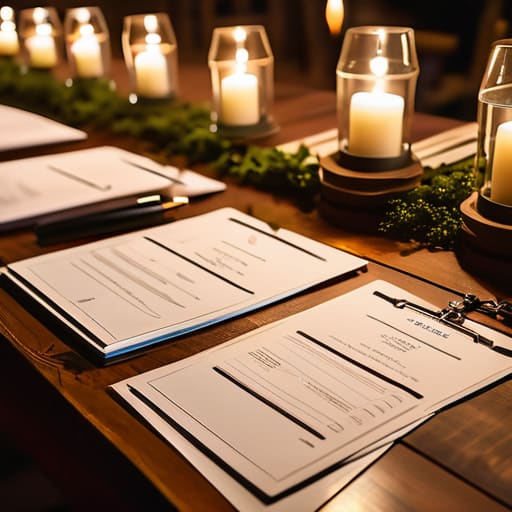
At the end of the day, a running order isn’t some decorative document to be filed away in a wedding folder; it is your tactical survival guide. We’ve looked at the heavy lifting—from the pre-event production scheduling that prevents a catering bottleneck to the granular mapping of those awkward gaps between the ceremony and the first course. If you manage the timings, the power requirements, and the transition windows, you aren’t just following a schedule; you are controlling the chaos. Remember, the guests will only notice the rhythm of the evening if you’ve already solved the friction points they’ll never see.
When the lights go down and the first course is being laid, don’t mistake a smooth flow for luck. It is the result of every calculated minute and every contingency plan you tucked into the margins. An event might look like a dream of silk and candlelight, but you know the truth: it is a logistics problem wearing a nice outfit. Master the mechanics, respect the licence end, and build your plan around the reality of human movement. If you get the architecture right, the magic will take care of itself, and you might actually get to enjoy the party instead of just managing it.
Frequently Asked Questions
How much "buffer time" should I actually build in between the ceremony and the wedding breakfast without making the guests feel like they're stuck in a waiting room?
Look, if you give them forty-five minutes of nothing, they’ll start eyeing the bar and getting restless. If you give them fifteen, the caterers will be sprinting through the crowd with trays of canapés like it’s a combat zone. Aim for thirty minutes of high-quality “active” transition. Keep the drinks flowing and the music moving. You aren’t just filling time; you’re managing the gap between the ceremony’s emotion and the dinner’s hunger.
If the caterer is running twenty minutes behind on the main course, at what point do I officially scrap the speeches to save the evening?
The moment the kitchen staff starts looking at you with that “we’re drowning” stare, the clock is ticking. If you’re twenty minutes behind, you don’t just “move” the speeches; you amputate them. You scrap the long-winded toasts immediately and move to a “one person, two minutes” rule, or better yet, tell the MC to kill the remaining slots. You save the evening by feeding people. A hungry guest is a restless guest, and a restless guest is a liability.
How do I manage a running order when I have a strict licence end time that I absolutely cannot push back?
You don’t manage the running order; you manage the clock, and the clock is a tyrant. When that licence end time is non-negotiable, you work backward. If the music has to stop at midnight, the last dance isn’t at 11:55—it’s at 11:30. You build in a thirty-minute “buffer of chaos” for the inevitable delays: the uncle who won’t stop talking, the slow bar service, or the photographer needing one last shot. If you don’t bake that friction into the schedule, the friction will eat your event.