I’ve spent eighteen years watching people pour thousands of pounds into truffle-infused menus and artisanal garnish, only to have the entire evening collapse because they forgot to ask the caterer where they were going to plug in the warming ovens. Most people will hand you a “complete guide to event catering” that looks like a glossy lifestyle magazine, filled with pictures of perfectly plated micro-greens and nothing else. But if you ask me, those guides are missing the point entirely. They tell you what the food should look like, but they never tell you how to manage the logistical chaos of getting two hundred hungry guests fed before the music starts and the licence end looms over your head like a guillotine.
I’m not here to sell you on a dream or a specific flavor profile; I’m here to talk about the reality of the service. This is my version of a complete guide to event catering, stripped of the fluff and focused on the things that actually matter: load-in times, power requirements, dietary math, and the crucial turnaround between the ceremony and the first course. I’m going to show you how to plan for the unseen friction so that when the day actually arrives, the only thing your guests notice is that the drinks are cold and the food is hot.
Table of Contents
Menu Design Principles and the Reality of Catering Budget Planning

When you sit down to look at menu design principles, don’t just pick the dishes that look good on a Pinterest board. You need to look at the mechanics of how that food actually moves from the kitchen to the guest. I’ve seen plenty of ambitious menus fall apart because the host didn’t account for the sheer physics of the room. If you choose a high-end plated service, you aren’t just paying for the ingredients; you are paying for the army of hands required to get those plates down before the food loses its soul. Conversely, a buffet can feel casual, but if you don’t manage the flow, you’ll end up with a bottleneck of hungry people staring at a tray of lukewarm chicken while the music plays on.
This is where real catering budget planning kicks in. Most people think the budget is just “food plus a bit extra.” It isn’t. You have to factor in the hidden costs of complexity. A menu with ten different bespoke options might please everyone’s ego, but it doubles your dietary restriction management workload and sends your staff requirements through the roof. I always tell my clients: keep the menu tight, keep the logistics lean, and for heaven’s sake, plan for the person who forgot they were allergic to everything.
Buffet vs Plated Service Calculating the Real Cost of Movement
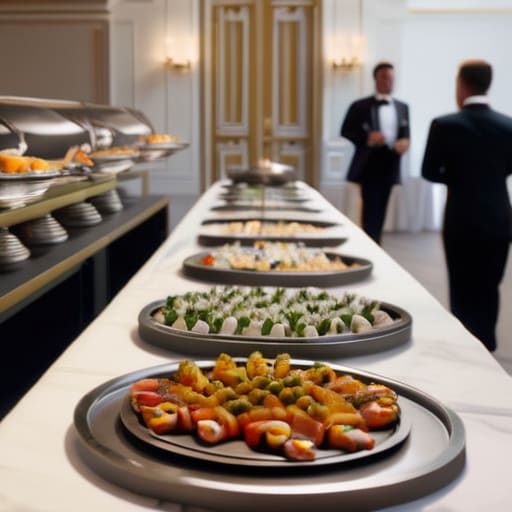
When you’re weighing up buffet vs plated service, stop looking at the price per head on the menu and start looking at the floor plan. A buffet looks like a cost-saver on paper, but it’s a high-velocity movement problem. You have a hundred hungry guests all trying to converge on a single point at 8:00 PM, and if your service area isn’t wide enough, you’ll have a bottleneck that kills the momentum of the entire evening. You also have to account for the hidden labour costs; you might save on waiters, but you’ll spend it on the back-end staff needed to constantly replenish trays and manage the chaos.
Plated service is the opposite—it’s a choreographed dance that requires precision timing and a significantly higher ratio of catering staff requirements. If you have a 12:00 AM licence end, you cannot afford a slow-moving kitchen that takes ninety minutes to clear courses. Every minute the plates are sitting under a heat lamp is a minute stolen from the dance floor. If you go plated, you aren’t just paying for the food; you are paying for the logistical discipline required to move plates in and out without the room feeling like a frantic cafeteria.
The Logistics Nobody Mentions in the Brochure
- Stop planning your menu based on what sounds good on paper and start planning it based on your venue’s power supply. If you hire a caterer who brings three induction hobs and a coffee machine, but your allocated circuit is already struggling with the DJ’s lighting rig, you aren’t getting dinner served—you’re getting a blown fuse and a room full of hungry guests at 8:00 PM.
- Account for the ‘Service Gap’ in your timeline. Most people budget for the time it takes to eat the food, but they forget the time it takes to actually move it. If you have 150 guests and only two servers, that plated main course isn’t hitting the table at 7:30 PM; it’s hitting the table at 8:15 PM when the first plate is finally lukewarm.
- The ‘Hidden Footprint’ of your caterer is real. When you’re looking at floor plans, don’t just look at where the tables go; look at where the service happens. A caterer doesn’t just need a table; they need a staging area, a place for dirty plates to vanish, and enough clearance for a trolley to turn around without clipping your grandmother’s chair.
- Drink service is a math problem, not a hospitality one. If you have a 20-minute window for a drinks reception, you need to calculate how many people can actually reach a bar and get a glass in that time. If the ratio is off, you’ll spend the first hour of your event watching people hover awkwardly around a bar queue instead of actually mingling.
- Respect the licence end like it’s a hard wall. I’ve seen planners try to squeeze a dessert course into the final thirty minutes of a licence. It doesn’t work. You need to work backwards from the moment the music has to stop and the lights go up. If your catering schedule doesn’t have a built-in buffer for a late speech or a slow transition, you’re going to be clearing plates while the guests are being ushered toward the exit.
The Final Countdown
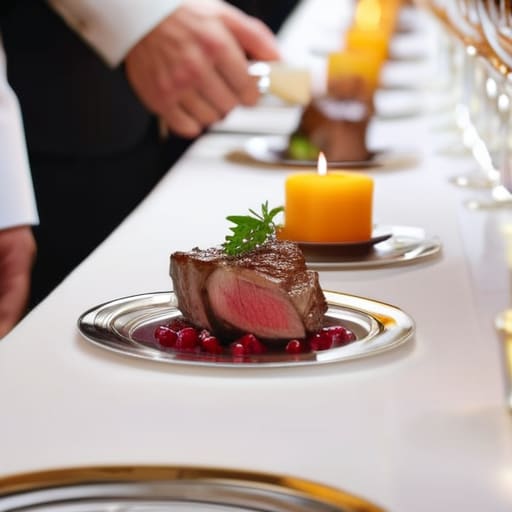
At the end of the day, a successful catering plan isn’t found in a glossy brochure; it’s found in the math. You’ve looked at the menu costs, you’ve weighed the efficiency of a buffet against the elegance of a plated service, and you’ve hopefully accounted for the physical footprint the staff needs to actually move without tripping over your centrepieces. Remember that every decision you make—from the complexity of the sauces to the number of servers on the floor—is a direct lever on your budget and your timeline. If you don’t respect the logistical reality of the service, the most expensive steak in the world won’t save you when the guests are staring at empty glasses and the licence end is looming like a dark cloud.
I know it feels overwhelming when you start pulling at these threads, but there is a reason the best events look so easy. They look effortless because the person behind the scenes has already solved the problems before the first guest even arrives. Don’t let the pursuit of the “perfect” aesthetic blind you to the mechanics that make the party actually work. If you nail the timings, protect your margins, and give your caterers the space they need to do their jobs, you aren’t just feeding people—you are engineering an experience. Plan for the chaos, budget for the reality, and I promise you, the night will run exactly as it should.
Frequently Asked Questions
How much extra time do I actually need to build into the schedule for the transition from canapés to the main meal?
People always think you can just whistle and everyone magically sits down. You can’t. If your canapés end at 4:00 PM, do not plan for a 4:05 PM sit-down. You need a minimum of thirty minutes of “buffer” time. Between guests finding their seats, the caterers clearing trays, and that one uncle who won’t stop talking by the bar, you’re looking at a forty-minute transition. Anything less, and you’re chasing the clock until the licence ends.
What happens to my budget if I decide to change the service style (like moving from a buffet to plated) halfway through planning?
Changing your mind halfway through is a budget killer, plain and simple. If you’re pivoting from a buffet to a plated service, you aren’t just swapping food; you’re adding staff. You’ll need more servers to hit every table before the food gets cold, and you’ll likely face a “re-planning fee” from the caterer. It’s a logistical pivot that ripples through your entire timeline. Check the licence end—you don’t want to pay more for a service that runs late.
How do I figure out if my venue’s power supply and kitchen access can actually handle the specific equipment my caterer is bringing?
Don’t just take the caterer’s word for it. Ask them for a full equipment list—specifically their high-draw items like combi-ovens, coffee machines, or induction hobs—and then cross-reference that with your venue’s circuit map. I’ve seen weddings go sideways because a caterer plugged a warming cabinet into the same circuit as the DJ, tripping the breaker mid-first dance. If your kitchen access is a narrow corridor or a single flight of stairs, factor that into their setup time too.