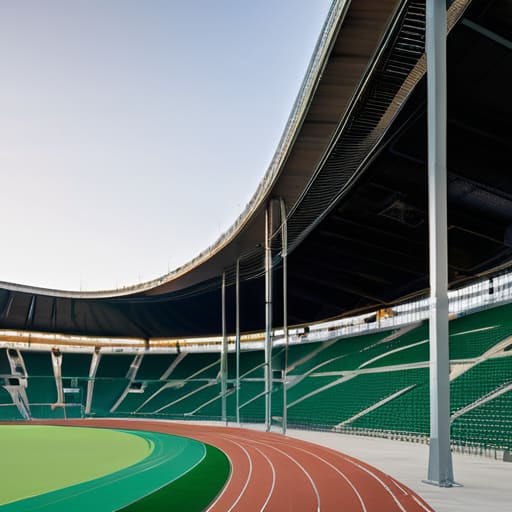
I once stood in the tunnel of a mid-sized arena three hours before a corporate gala, watching a technician struggle with a cable run that was supposed to be “seamless.” The brochure promised a majestic, high-tech spectacle, but all I saw was a massive concrete bowl that didn’t care about my client’s dinner service. People love to romanticize the scale of these places, but if you’re looking at a glossy rendering of a stadium to understand how sports venues are used for events, you’re already halfway to a disaster. The reality isn’t about the sweeping views from the VIP suites; it’s about the unforgiving geometry of a pitch and whether your caterers can actually find a loading bay that isn’t blocked by a team bus.
I’m not here to sell you on the glamour of the lights or the prestige of the postcode. My goal is to pull back the curtain on the actual mechanics of the build—the power requirements, the terrifyingly tight turnarounds, and the logistical nightmares that occur when you try to fit a black-tie banquet into a space designed for mud and contact sports. I’ll give you the honest, unvarnished truth about what it takes to make these massive spaces work without breaking your budget or your sanity.
Table of Contents
Mastering the Chaos of Multi Purpose Arena Utility
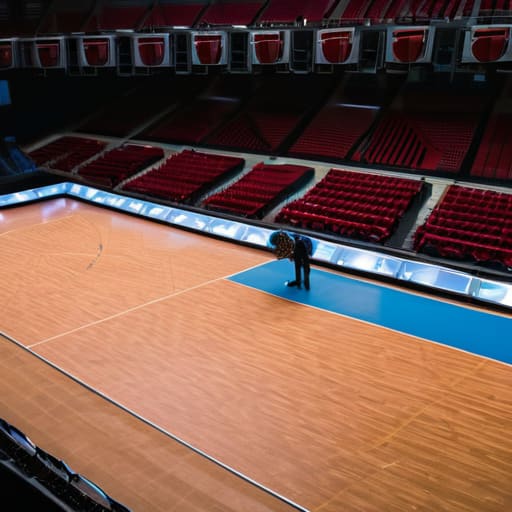
When you look at a massive arena, you see a stage for a concert or a field for a championship game. I see a headache involving floor coverings and power distribution. The real challenge of multi-purpose arena utility isn’t just having the space; it’s the brutal reality of the “flip.” You might have a basketball game ending at 10:00 PM, but if you have a corporate gala scheduled for 8:00 AM the next morning, you aren’t just cleaning up—you are performing a high-stakes surgical operation on a floor that wasn’t designed to be a ballroom.
It’s the invisible friction that kills a budget. You can have the most expensive lighting rig in the world, but if your spectator flow and crowd control plan hasn’t accounted for three thousand people trying to exit through a single concourse after a set, you’re going to have a riot on your hands before the first encore is even finished. You have to plan for the bottlenecks, the heavy equipment access, and the fact that a stadium is a beast that doesn’t like being told how to behave.
The Brutal Reality of Non Sporting Event Scheduling
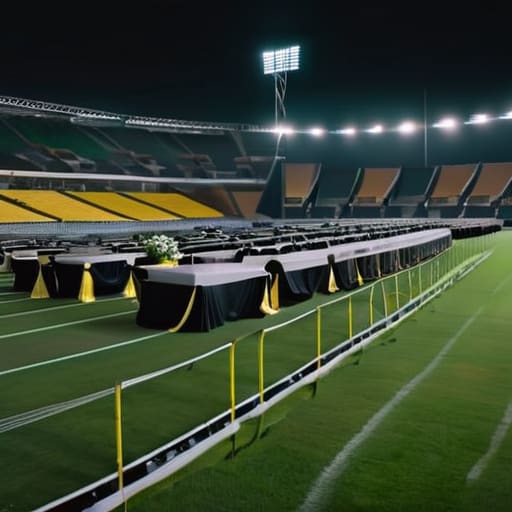
Most people look at a stadium schedule and see a clean calendar of games and concerts. I see a high-stakes game of Tetris where the pieces are made of heavy machinery and human error. The real headache isn’t the big event itself; it’s the non-sporting event scheduling that happens in the gaps. You might have a football match on a Saturday, but if a corporate gala is booked for Sunday morning, you aren’t just changing the decor. You are fighting a war against turf recovery, cleaning crews who are working on four hours of sleep, and the absolute nightmare of a twenty-four-hour turnaround.
When you move from a pitch to a ballroom, the stadium event logistics shift from managing athletes to managing expectations. A concert crowd wants beer and loud music; a wedding party wants fine linen and quiet. If you haven’t accounted for the transition, you’ll find your catering team trying to set up a buffet on a surface that still smells like spilled lager and damp grass. It’s not about the aesthetic—it’s about whether the power supply can handle a high-end lighting rig without tripping the circuit for the entire VIP lounge.
The Practicalities of Not Breaking the Building (or Your Budget)
- Stop looking at the seating capacity and start looking at the egress. A stadium might hold fifty thousand people, but if your event requires a high-end gala setup, you need to know exactly how many of those exits can be used for catering deliveries without tripping over a security guard or a VIP.
- Respect the power draw. You can’t just plug a massive concert lighting rig into a standard wall socket and hope for the best; you need to map out your electrical load before the first technician arrives, or you’ll be sitting in the dark halfway through the keynote.
- Plan for the “dead time” between transitions. If you’re moving from a seated conference to a standing reception, you aren’t just moving chairs—you’re managing a logistical bottleneck of people, cleaning crews, and AV technicians all fighting for the same three metres of floor space.
- The floor is your most expensive asset. Whether it’s a pristine hardwood court or a high-grade synthetic turf, if you haven’t budgeted for heavy-duty protection, you’re going to spend your entire post-event wrap-up explaining to the owner why there are scuff marks where the buffet table used to be.
- Audit your loading bays with a stopwatch. In a sports venue, the loading dock is the heartbeat of the event; if your suppliers don’t have a precise, timed window for arrival, you’ll end up with three delivery trucks idling in the street and a catering team waiting for a pallet that’s stuck in traffic.
The Final Whistle
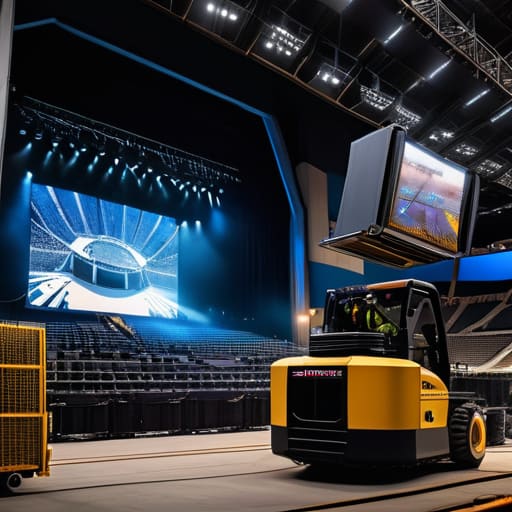
At the end of the day, converting a stadium or an arena into a functional event space isn’t about the magic of the transformation; it’s about the math. You have to account for the load-in times that eat your morning, the power draws that threaten to trip a circuit, and the sheer, unadulterated difficulty of moving a crowd through a concrete tunnel that was designed for spectators, not a seated banquet. If you ignore the logistical friction of the venue’s primary purpose, you’ll spend the entire night firefighting instead of hosting. Success in these massive, multi-purpose spaces comes down to respecting the physical limits of the building and ensuring your turnaround windows are realistic rather than hopeful.
Ultimately, a sports venue is a beast of a machine, but when the lighting is right and the flow is seamless, that machine performs miracles. There is a specific kind of adrenaline that comes from pulling off a high-stakes event in a space that was never meant to hold it, proving that with enough foresight, even the most rigid architecture can become a canvas. Don’t let the scale intimidate you; just remember that even the most massive arena is just a collection of smaller problems waiting to be solved. Plan for the worst-case scenario, and you might just find yourself enjoying the effortless success of a night well run.
Frequently Asked Questions
How do you actually manage the turnaround time between a match finishing and a concert setup starting without blowing the budget on extra labor?
You don’t solve this with more bodies; you solve it with a tighter schedule. Most people think you just throw more hands at the problem, but that’s how you end up with forty guys standing around at 2:00 AM eating cold pizza on your dime. It’s about the staging. If the gear isn’t pre-rigged or staged in a way that allows for a seamless flow from pitch to stage, you’re burning money. You need a choreographed handover, not a frantic scramble.
What happens to the venue's infrastructure—like power and floor loading—when you switch from a grass pitch to a heavy-duty trade show or a concert stage?
You can’t just roll a stage onto a pitch and hope for the best. When you swap grass for a trade show, you’re suddenly fighting physics. You’ve got heavy-duty exhibition stands exerting massive point loads that can crush drainage or compact soil into a mess. Then there’s the power; a football match needs a few floodlights, but a concert needs enough juice to run a small city. If your infrastructure isn’t ready, your “effortless” event is just a very expensive disaster.
How do you handle the logistical nightmare of catering and bar service for a crowd that’s used to stadium food but expects high-end event hospitality?
It’s a collision of expectations. You’ve got a crowd that wants the speed of a stadium concession stand but the soul of a Michelin-starred tasting menu. You can’t give them both with a single service point. My rule? Over-engineer the flow. You need high-volume prep stations hidden in the wings and enough bar staff to prevent a bottleneck that turns a premium cocktail hour into a twenty-minute queue. If they’re waiting, the hospitality is already dead.