I once watched a wedding go sideways because the bride thought a buffet would “feel more relaxed,” forgetting that she had a hundred guests and only two narrow access points to the service area. Within twenty minutes, I had a line of hungry people snaking past the cake table, a bottleneck at the carving station that looked more like a riot, and a groom who was visibly sweating because his dinner was delayed by forty minutes. When you’re choosing between buffet and plated meals, you aren’t just picking a menu; you are deciding exactly how much friction you want to introduce into your evening’s timeline.
If you’re staring at your spreadsheet wondering if you can actually afford the per-head increase for a plated service, don’t just guess—you need to get granular with your numbers before the deposit becomes non-refundable. I always tell my clients that the hidden costs are usually found in the service staff ratio, not the food itself. If you want to get ahead of the math and see how these different service styles actually impact your bottom line, I’d suggest checking out this plan cul granny to help you map out the realistic expenses. It’s better to find the budget leak now than to be standing in my loading bay at 11:00 PM realizing you’ve run out of funds for the extra servers you actually needed to keep the room moving.
Forget the glossy brochures that make both options look like effortless magic. I’ve spent eighteen years managing the chaos behind the scenes, and I’m here to tell you that every choice has a hidden cost in time, floor space, and staff sanity. I’m going to strip away the fluff and talk about the real mechanics: the service speed, the guest flow, and the unseen logistics that actually determine whether your guests leave happy or just plain hungry.
The Plated Service: Precision on a Plate
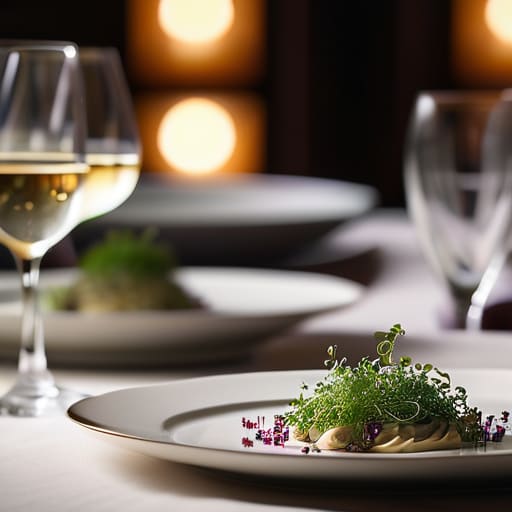
A plated meal is a structured dining format where each course is individually portioned and served directly to the guest at their seat. The core mechanism relies on a synchronized service team to deliver uniform dishes simultaneously, offering the primary advantage of controlled pacing and a high sense of formality. By choosing a plated service, you are essentially opting for a choreographed sequence that dictates the rhythm of the entire evening.
In my experience, this isn’t just about fancy presentation; it’s about managing the room. When I see a well-executed plated service, I see a venue manager breathing a sigh of relief because I know exactly where every guest is in the timeline. You aren’t chasing people down or wondering if the elderly aunt has found a seat; you are moving a crowd through a predictable, timed progression. It eliminates the chaos of a crowd, but it demands that your kitchen and your floor staff are perfectly in sync to avoid a bottleneck that stalls the speeches.
The Buffet: The Art of the Managed Line
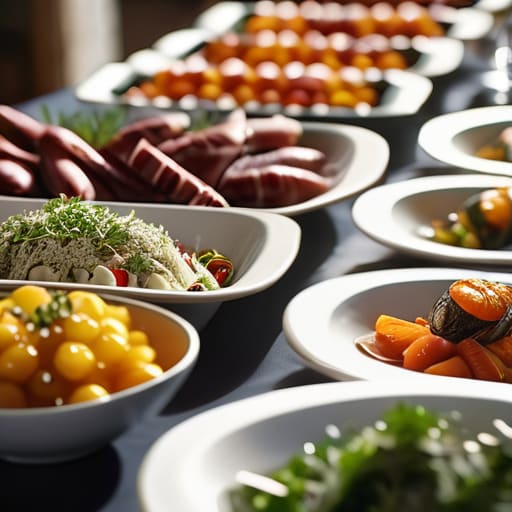
A buffet is a self-service dining style where various dishes are laid out on long tables for guests to serve themselves. The mechanism is simple: you provide a wide array of options in a central location, offering the main selling point of maximum variety and a more relaxed, social atmosphere. It allows guests to tailor their plates to their own appetites and dietary whims without needing to ask a server for permission.
However, let’s be honest about the reality of choosing between buffet and plated meals when the room is at capacity. A buffet is a high-speed logistics puzzle; if you don’t calculate the flow, you end up with a “buffet bottleneck” where half your guests are standing in a stagnant line while the other half are already halfway through their second glass of wine. It feels casual, sure, but if you haven’t planned for the physical footprint of that line or the sheer number of staff needed to clear those plates, your “relaxed” dinner will quickly turn into a disorganized scramble.
Comparison of Buffet vs. Plated Meal Services
| Feature | Buffet | Plated |
|---|---|---|
| Key Feature | Self-service variety | Controlled portioning |
| Best For | Casual gatherings & large crowds | Formal events & weddings |
| Cost Structure | Variable based on consumption | Fixed per person |
| Service Style | High guest movement | High staff interaction |
| Dietary Control | High guest autonomy | High chef precision |
| Time Efficiency | Faster initial service | Slower paced dining |
| Presentation | Abundant display | Elegant individual plating |
The Seated Dinner vs Buffet Style Friction Point
If you think the choice between a buffet and a plated meal is just about what people like to eat, you’ve already lost the battle. This isn’t about culinary preference; it’s about managing the kinetic energy of a room. Once the speeches wrap and the hunger sets in, you aren’t just feeding people—you are managing a sudden, massive shift in the room’s momentum.
A plated service is a controlled burn. It’s predictable, it keeps the guests in their seats, and it allows me to time the service precisely against the licence end. You know exactly when the last fork hits the plate. A buffet, however, is a logistical bottleneck waiting to happen. I’ve seen it a hundred times: a hundred hungry guests suddenly trying to navigate a single narrow path to the carving station, leaving half the room standing around with empty glasses and growing resentment.
If your priority is keeping the evening on a strict, predictable schedule, the plated service wins every single time. It eliminates the “drift” that happens when guests are stuck in a queue instead of enjoying the atmosphere.
Catering Logistics for Large Groups and Moving Masses
When you have two hundred people in a room, you aren’t managing guests; you are managing human tides. The moment you decide how food moves from the kitchen to the mouth, you are deciding whether your evening flows like a calm river or hits a massive, hungry bottleneck. If you miscalculate the physics of a crowd, you don’t just have a slow dinner—you have a room full of impatient, hangry people staring at the clock.
A plated service is the ultimate control mechanism. It’s predictable. I know exactly when the forks hit the plates and, more importantly, I know exactly when the room is cleared for the first dance. It keeps the mass stationary, which is a lifesaver for my floor staff. A buffet, however, is a chaotic variable. Even with multiple stations, you are dealing with the “accordion effect”—where half the room is eating while the other half is standing in a queue, watching their drinks go warm on a nearby table.
For large-scale logistics, the plated service wins every single time. It trades a bit of guest autonomy for the one thing you can’t buy more of: predictable timing.
The Final Tally
At the end of the day, your choice comes down to a trade-off between control and variety. If you want a predictable timeline where I can tell you exactly when the last person will have finished their dessert—keeping us well within the licence end—go with the plated service. It keeps the room moving and the energy focused. But if you’re willing to trade that rigid schedule for a bit of social chaos and a wider spread of food, the buffet is your winner. Just don’t come to me surprised when the line for the roast beef starts looking like a queue for the post office. You have to decide if you want to manage the flow of the crowd or the precision of the clock.
Forget the glossy wedding magazines for a moment; they don’t have to deal with the hungry guests or the kitchen’s egress routes. Your job isn’t to create a perfect Pinterest board, it’s to facilitate a successful evening where people actually enjoy themselves. Whether you choose the structured elegance of a seated meal or the relaxed, slightly messy charm of a buffet, ensure your decision matches your venue’s capacity and your guests’ temperament. When the logistics are handled, the magic happens naturally. A well-timed meal is the foundation of a great party, and once that’s sorted, the rest of the night usually takes care of itself.