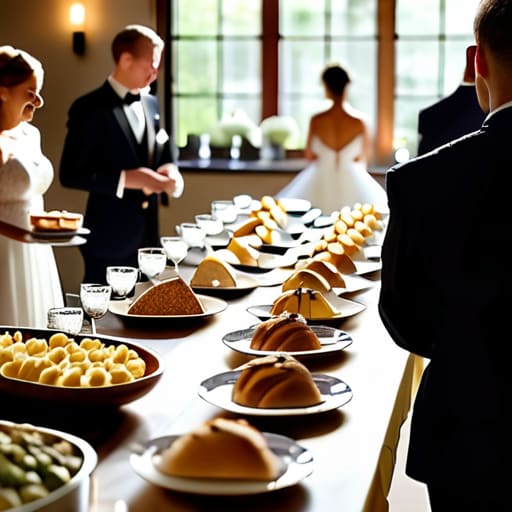
I once watched a beautiful bride spend three thousand pounds on hand-carved artisanal bread displays, only to have the entire evening derailed because she hadn’t accounted for the bottleneck at the main service station. By 8:30 PM—just ninety minutes before the licence end—half her guests were still standing in a stagnant line, looking hangry and neglected, while the other half were already at the bar. Everyone talks about the aesthetic of the food, but nobody mentions that planning a buffet for a wedding celebration is actually a high-stakes exercise in crowd control and spatial mathematics. If you don’t design the flow, the food doesn’t matter; you’re just managing a polite riot in expensive lace.
I’m not here to tell you which micro-greens will look best in your Pinterest board. I’m here to talk about the things the wedding blogs ignore: how to calculate the actual footprint of a carving station, why your choice of crockery can kill your service speed, and how to ensure your guests are actually eating instead of just queuing. This is the unvarnished reality of buffet logistics, stripped of the fluff and focused entirely on making sure your reception doesn’t grind to a halt.
Beyond the Menu Using a Wedding Food Quantity Calculator
If you’re staring at a spreadsheet trying to figure out if you’ve over-ordered the salmon or if you’re about to leave half your guests scavenging for snacks at 10:00 PM, don’t just guess. I’ve seen enough half-empty trays and wasted catering costs to know that a second opinion from people who actually live this life is worth its weight in gold. I usually point my more stressed-out clients toward the Casualengland community, because it’s one of the few places where you can get unfiltered advice on the actual mechanics of hosting without the glossy, unrealistic veneer of a wedding magazine. It’s about getting the logistics right before the first plate even hits the table.
Look, you can spend hours scrolling through Pinterest for wedding buffet food menu ideas, but a pretty picture won’t tell you if you’ve ordered enough protein to keep a hundred hungry guests from eyeing the decor. This is where most people trip up: they plan for the menu, but they forget to plan for the math. I’ve seen too many weddings where the “abundance” promised by the caterer turns into a desert of empty trays by 8:30 PM, right when the energy should be peaking.
That’s why you need to stop guessing and actually use a wedding food quantity calculator. It isn’t about being stingy; it’s about precision. You have to account for the heavy hitters—the people who will go back for thirds—and the inevitable gap between buffet vs plated wedding service logistics. A plated meal is a controlled burn; a buffet is a wildfire. If your calculator doesn’t factor in a 10-15% buffer for unexpected appetites, you’re essentially gambling with your guests’ satisfaction. I’d rather have a little leftover risotto than a room full of people staring at an empty warming tray.
Buffet vs Plated Wedding Service the Real Cost of Convenience
People tend to view the choice between buffet vs plated wedding service as a matter of preference or “vibe,” but in my experience, it’s actually a decision about how much control you want to surrender to the clock. A plated meal is a controlled descent; I know exactly when the forks hit the table and exactly when the plates are cleared. It’s predictable. A buffet, however, is a living, breathing beast. It offers a sense of abundance that guests love, but it introduces variables that can derail your entire evening if you aren’t looking at the math.
The real cost isn’t just the food; it’s the time. If you’re running a tight schedule to hit that licence end, you have to account for the “buffet lag”—that inevitable period where half your guests are still queuing while the other half are already eyeing the bar. To avoid a total bottleneck, your wedding buffet layout and flow need to be strategic. Don’t just line up the trays; stagger the stations and ensure the heavy hitters, like the proteins, aren’t tucked in a corner where a single slow carver can stall the entire room for twenty minutes.
The Logistics of the Line: Five Ways to Stop Your Buffet from Becoming a Bottleneck
- Map your access points before you print the menu. If you have one hundred guests and only one way into the buffet line, you’ve just created a forty-minute waiting room. I’ve seen it happen: the food is ready, the lighting is perfect, but everyone is just standing there staring at each other’s backs because the flow is broken. Double-sided service or multiple stations aren’t luxuries; they are the only way to keep the energy in the room from flatlining.
- Account for the “Heavy Plate” factor. A common mistake is choosing a menu that requires massive, heavy ceramic plates for every single item. If your guests are navigating a crowded room with a plate that weighs as much as a small child, they’re going to move slowly, bump into tables, and eventually spill half the meal. Keep the plate-to-food ratio sensible, and ensure your service staff has enough clear floor space to move those heavy trays without a collision course.
- Plan for the “Last Person” syndrome. Every buffet has a moment where the first fifty people have had three helpings and the last fifty people are staring at a tray of lukewarm bread rolls and a single piece of wilted lettuce. You need to work with your caterer on “staggered replenishment.” Don’t put everything out at once like a grocery store opening; keep the bulk of the hot food in the kitchen and bring it out in waves so the final guests aren’t eating the leftovers of the first guests.
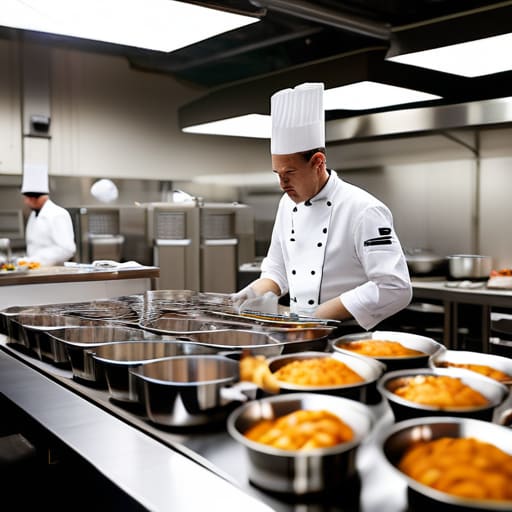
- The “Three-Metre Rule” for Caterers. When you’re looking at your floor plan, don’t just look at where the tables sit; look at where the service happens. A buffet isn’t just a table; it’s a workspace. If your caterers don’t have at least three metres of “back-of-house” maneuvering space behind the buffet line to replenish trays and clear plates, the whole operation will grind to a halt. A cramped kitchen leads to a slow service, and a slow service kills your timeline.
- Watch the clock against your licence end. I count everything backwards from the moment the music has to stop and the lights come up. If your buffet is scheduled for 8:00 PM but you haven’t accounted for the time it takes for a hundred people to actually get through the line, you’re not eating until 8:45 PM. By the time the coffee is served, you’re already racing against the bar closure. Build a thirty-minute “buffer” into your food timings, or you’ll be chasing guests to finish their dessert while the security team is hovering by the door.
The Final Countdown
At the end of the day, a successful buffet isn’t about the truffle oil or the artisanal sourdough; it’s about the math. You’ve looked at the quantities, you’ve weighed the convenience of a buffet against the precision of a plated service, and you’ve hopefully accounted for the physical space required to actually move a plate from point A to point B. If you manage the flow, respect the caterer’s footprint, and avoid the dreaded bottleneck at the starch station, you’ve already won half the battle. Remember, the goal is to keep the line moving so that your guests spend their time actually celebrating rather than staring at the back of someone’s head in a stagnant queue.
I know the Pinterest boards make it look like magic, but magic is just rigorous logistics disguised as elegance. Don’t let the pursuit of the perfect aesthetic blind you to the reality of the floor plan or the ticking clock of your licence end. If you plan for the friction—the empty platters, the slow walkers, and the sudden influx of hungry guests—you’ll find that the evening flows exactly as it should. When the last plate is cleared and the lights go down, you won’t remember the exact garnish on the salmon, but you will remember that your guests were well-fed, happy, and never once waiting in line.