I’ve spent twenty years watching people pour thousands into bespoke floral arches and hand-lettered signage, only to have their entire afternoon dissolve because they forgot to check the ground saturation or the distance to the nearest power socket. Most people will give you a “complete guide to outdoor events” that looks like a Pinterest board, filled with dreamy sunset shots and linen napkins. But if you ask me, those guides are missing the actual mechanics of why a garden wedding turns into a logistical nightmare by 4:00 PM. I’ve stood in the mud at midnight, watching a caterer struggle with a generator that’s twenty metres too far from the prep station, and I can tell you right now: the aesthetics don’t matter if your guests are standing in a puddle with empty glasses.
I’m not here to sell you on a dream; I’m here to help you manage the reality. This isn’t a styling manual—it’s a logistics blueprint built from nine hundred weddings and a fair few near-disasters. I’m going to walk you through the gritty, unphotographable details: site access, drainage, power loads, and the critical timing of your licence end. If you want to know how to make an outdoor event actually work without losing your mind (or your deposit), you’re in the right place.
Table of Contents
The Brutal Truth of Outdoor Event Venue Selection
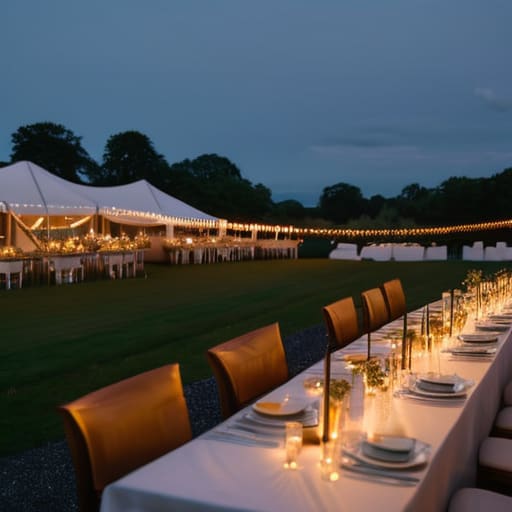
When you’re scrolling through Pinterest, every outdoor venue looks like a sun-drenched meadow of effortless bliss. In reality, your outdoor event venue selection shouldn’t be based on how the light hits the oak trees at 4:00 PM; it should be based on the soil. If that “dreamy” field turns into a marsh after twenty minutes of drizzle, your guests aren’t dancing—they’re sinking. I’ve seen weddings ruined not by bad music, but by a venue that promised “nature” but forgot to mention they have zero drainage and even less access for a heavy catering van.
Before you sign anything, you need a proper site inspection checklist that goes deeper than the aesthetic. I don’t care how beautiful the view is if the distance from the kitchen to the buffet means the food arrives lukewarm, or if the outdoor lighting and power requirements for your DJ are going to trip a breaker the moment the string lights flicker on. You aren’t just renting a view; you are renting a piece of infrastructure. If the venue can’t tell you exactly where the power is coming from and how many portable restrooms are within a reasonable walking distance, run the other way.
Site Inspection Checklists for the Unforgiving Terrain
When you step onto a site for a walkthrough, don’t just look at the view; look at the ground. I’ve seen more weddings ruined by a muddy trek to the toilets than by a bad DJ. Your site inspection checklist needs to include a literal “footprint test.” If the grass is uneven or the slope is aggressive, your guests aren’t walking; they’re mountaineering in heels. You need to map out exactly where the heavy machinery goes. If the caterer has to haul three hundred kilos of equipment across a soft field, you aren’t just looking at a logistics headache; you’re looking at a sinkhole that will swallow your budget and your timeline.
Then there is the invisible infrastructure. Forget the aesthetics for a moment and find the sockets. I cannot stress enough how critical outdoor lighting and power requirements are when the sun decides to clock out early. If you are relying on a single daisy-chained extension lead to run a coffee machine, a DJ, and a string of festoons, you are playing a dangerous game. Check the distance from the generator to the service area—if it’s too far, you’ll lose voltage, the lights will flicker, and your “effortless” evening will end with a very expensive, very dark silence.
The Logistics of Not Letting the Weather Ruin the Vibe
- Forget the floral arch for a moment and look at the floor. If you are hosting on grass, you need to account for the “heel factor.” If your guests are wearing stilettos and you haven’t budgeted for flooring or stable paths, half your guest list will be hobbling by the time the first course hits the table.
- Power is not a suggestion; it is a requirement. You cannot run a professional coffee station, a DJ rig, and a catering warming unit off a single daisy-chained extension cord from the garden shed. If you haven’t mapped out your wattage and secured a silent generator, expect the lights to flicker and the music to die exactly when the speeches start.
- The “Plan B” needs to be a real plan, not a desperate afterthought. If your backup option is “everyone stands under a small gazebo,” you haven’t planned for rain; you’ve planned for a crowd of wet, miserable people. Your indoor contingency must be able to hold the same number of people as your outdoor setup, or you’re going to have a bottleneck at the entrance that kills the mood instantly.
- Timing the drinks service is a mathematical equation, not a feeling. If you have a 20-minute gap between the ceremony and the reception, and you have 100 guests, you need more than two bartenders. If people are standing around empty-handed for too long, they start looking at the bar, then at their watches, and suddenly the “effortless” flow you wanted feels like a waiting room.
- Always work backward from the licence end. In an outdoor setting, people tend to lose track of time, but the local council won’t. If your licence ends at midnight, you need to know exactly when the last song starts, when the bar closes, and how long it takes to clear 150 empty glasses. If you don’t build those buffers into your schedule, you’ll be chasing guests toward the car park while the music is still playing.
The Final Countdown
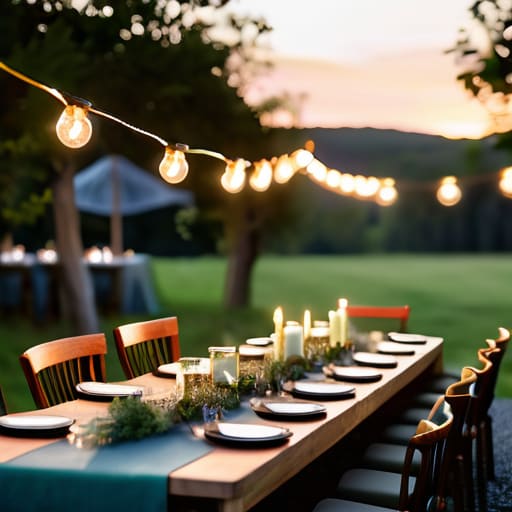
At the end of the day, an outdoor event is a delicate negotiation between your vision and the elements. You can spend months obsessing over the exact shade of sage green for the linens, but if you haven’t secured a backup plan for a sudden downpour or confirmed that your generator won’t trip the moment the band plugs in, you aren’t planning an event—you’re planning a disaster. Remember that success lives in the margins: it’s in the access routes for the catering van, the proximity of the toilets to the dance floor, and the hard math of your lighting requirements. If you nail the logistics, the beauty follows; if you ignore them, the beauty won’t save you when the sun goes down and the power fails.
I know it sounds cynical, but I promise you this: the guests won’t remember the specific floral arrangements or the exact menu descriptions. They will remember how they felt. They’ll remember if they were stuck in a muddy field with no way to get a drink, or if the transition from ceremony to cocktail hour felt seamless and effortless. When you solve the “unseen” problems before they happen, you create the space for people to actually enjoy themselves. Build your event on a foundation of solid, boring logistics, and I guarantee you’ll have a night that people talk about for all the right reasons. Now, go check your power cables one more time.
Frequently Asked Questions
How do I actually calculate how much power I need for a marquee without accidentally blowing a fuse halfway through the speeches?
Stop guessing. You don’t just “add up” the appliances; you have to account for the surge. That coffee machine and the DJ’s subwoofers might look fine on paper, but when they both kick in at once, your marquee becomes a very expensive dark room. List every single high-draw item—catering equipment, lighting, sound—and then add a 20% buffer. If you’re running a professional caterer, they’ll need more juice than you think. Plan for the peak, not the average.
What is the realistic "Plan B" timeline for moving two hundred people from a ceremony to a marquee if a sudden downpour hits?
Listen, if the clouds burst, you aren’t “transitioning”—you’re evacuating. For two hundred people, you need a forty-minute window minimum. Ten minutes for the guests to find their coats and shuffle toward the marquee, twenty minutes for the ushers to clear the ceremony space, and ten for your team to sprint ahead and ensure the buffet isn’t being pelted by rain. If you haven’t rehearsed that movement, you’ll have two hundred wet, grumpy people standing in a puddle.
How much extra should I be budgeting for the hidden costs of site access, like leveling ground or temporary flooring?
If you’re looking for a neat percentage, you’re already in trouble. But if you want a reality check: add 15% to 20% of your total logistics budget for “invisible” fixes. You aren’t just paying for the floor; you’re paying for the labor to level it and the transport to haul it in. Between rental delivery surcharges and the inevitable extra hands needed to stabilize a marquee on a slope, the “cheap” field gets expensive fast.